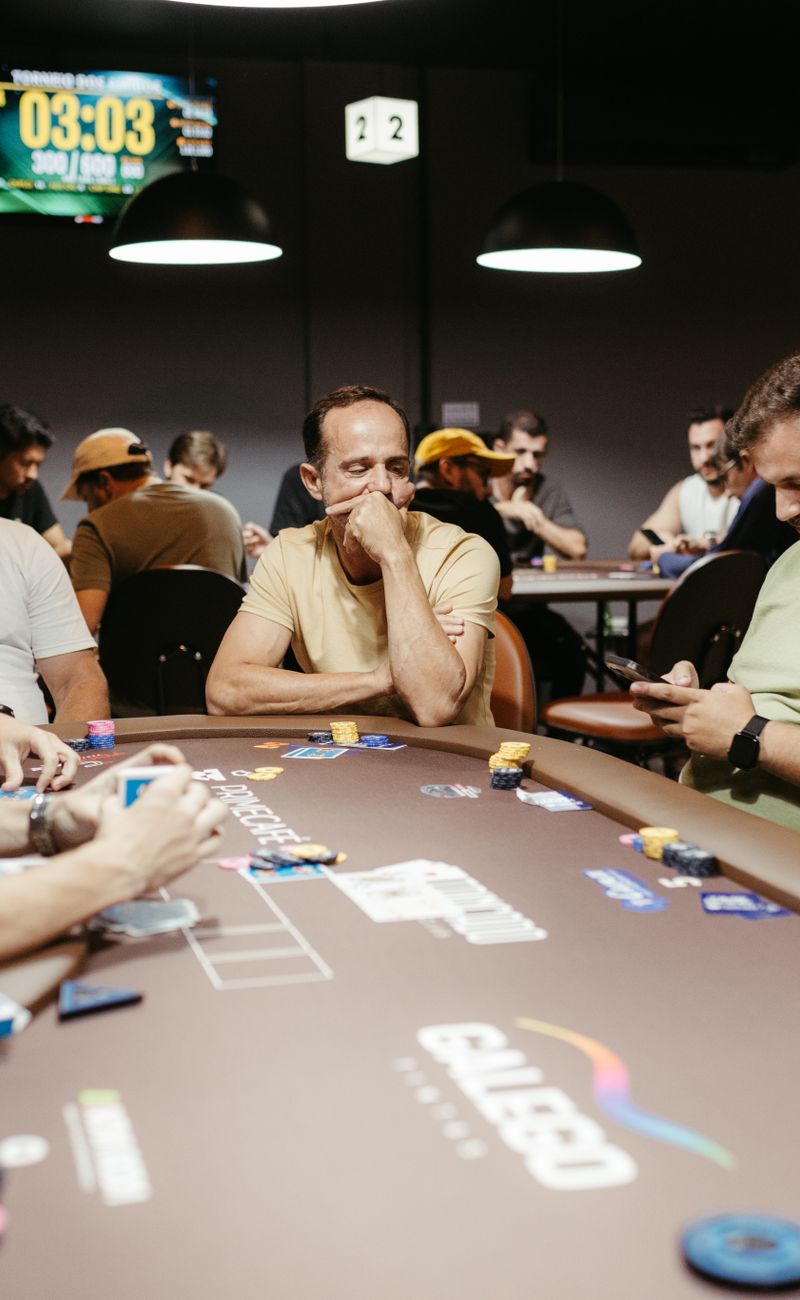
Tournament Final Table Strategy: Dominate the Last 9 Players (2026)
Master the critical skills needed to perform at the highest level when stakes are highest. Learn how to navigate pressure, adjust ranges, and exploit opponents at the tournament final table.

The Final Table Is Where Tournaments Are Actually Won
Most players spend their entire tournament lives playing to survive. They tighten up on the bubble, they fold too much when short, they coast into the money and breathe a sigh of relief. Then the final table happens and suddenly everything changes. Nine players remain. The payouts swing wildly between ninth and first. The pressure ramps up and the strategy that got you here will lose you the tournament faster than bad luck ever could. Your final table strategy determines whether you take home life-changing money or another min-cash story to tell your friends at the rail.
The players still in the tournament are not the same players you have been up against for hours. The field has been stripped of the weak and the lucky. Everyone at the final table has earned their seat. Some are short stacks praying for a double, some are chip leaders looking to apply pressure, and some are somewhere in between with legitimate designs on the title. The dynamics shift. The antes are massive. The blinds eat into stacks faster than you think. And the independent chip model math becomes the single most important factor in every decision you make from this point forward.
You need a plan. Not some vague notion of playing tight or aggressive. A real, practical final table strategy that accounts for stack sizes, payout jumps, opponent tendencies, and the specific pressure of playing for everything you have been building toward all tournament long.
ICM Is Your New Religion
Independent chip model pressure at the final table is unlike anything you have experienced earlier in the tournament. When nine players remain and first place pays five times what ninth pays, every hand carries weight far beyond its chip EV. You cannot simply calculate whether a call is +EV in chips. You need to calculate whether that call increases or decreases your actual probability of earning money.
When you are the short stack at the final table, folding looks weak but it is frequently correct. You have been waiting for a spot all tournament. You know you need to get it in. But the math does not care about your patience. If you are fifteen big blinds with a hand like Ace-Ten offsuit and the chip leader shoves into you, folding might be your best option. The reason is simple. If you call and lose, you are out in ninth. If you fold and let the field play itself, you might ladder without risking anything. The chip leader almost certainly has you covered. They are taking advantage of your desperation. Do not give them the satisfaction.
Medium stacks face the most complex decisions because they exist in no-man's-land. Too short to dominate, too big to simply fold their way to a payout. At this stack depth, you need to be highly selective about the hands you commit with. Your goal should be to either find a spot to pressure shorter stacks or to fold your way into a position where the remaining payout jumps matter more than accumulating chips. You are playing for survival and for the next pay jump simultaneously. This balancing act requires discipline that most players cannot maintain under final table pressure.
The chip leader has different concerns. You might think having the most chips is an unalloyed advantage, and it is, but only if you deploy it correctly. The chip leader should be aggressive, but not reckless. Your goal is to accumulate without taking unnecessary risks against other big stacks. Pressure the short stacks. Steal blinds and antes from players who cannot call without risking elimination. You are not trying to win the tournament on the first hand of the final table. You are trying to maintain your structural advantage while the field thins itself out behind you.
Reading the Table and Adjusting Your Strategy
Final table strategy is not played in a vacuum. You have been watching these players for hours, maybe days. You know who plays too tight, who bluffs too much, who folds too often to continuation bets. These reads are more valuable now than they have been at any other point in the tournament. The players are more consolidated, the pots are larger, and the decisions carry greater weight. Use everything you know.
Pay attention to stack reactions. When a player takes a bad beat or makes a laydown under pressure, that information shapes your future decisions. If Player X showed incredible fold equity earlier in the tournament but has been calling stations wide since the final table started, adjust your bluffing frequency accordingly. You are not running a solver. You are playing poker against human beings with specific tendencies and emotional states.
The short stack at the table often gets overlooked as a strategic factor. Big stacks target them. Medium stacks avoid them. But the short stack still has agency. They can pick their spots. They can apply pressure when the timing is right. And they can sometimes flip the entire dynamic by doubling through at the perfect moment. If you are the short stack, your final table strategy should be patient when the spots are not there and absolutely brutal when they are. Do not jam with garbage hoping to get lucky. Wait for hands with equity, then execute.
Position matters more at the final table than it has all tournament because the antes are massive and the stacks are deep enough to make continuation betting profitable. The button and cutoff become gold. You want to be in the pot with position on your opponents when possible. You want to avoid multiway pots out of position where the field can check behind and realize equity for free. If you are in the small blind or big blind with a marginal hand and several players have already limped, consider raising to take down the dead money. The math often works out even when your hand is not premium.
Exploiting Pay Jump Psychology
Every pay jump at the final table creates a psychological inflection point. The difference between ninth and eighth is often smaller than the difference between fourth and third. First and second might have more separation than the entire bottom half of the payouts. Understanding these jumps and how they affect your opponents' decision-making is a massive edge in your final table strategy.
Players who are laddering become extremely risk-averse. They will fold hands they would normally call with because the next payout level feels like a reward they do not want to squander. You can exploit this by raising wider against players you know are focused on laddering. They will fold more often than they should. They will call with narrower ranges when they do decide to commit. Neither behavior is optimal but both are human.
The flip side is players who are hunting. If someone is playing for the title, they might take risks they would not take if they were trying to lock up a specific payout. These players can be dangerous because they are thinking in terms of winning rather than surviving. They might three-bet light, float continuation bets more often, or call raises with hands that have no business seeing a flop. If you identify a player in hunting mode, adjust your value betting to extract maximum value from their aggression.
Be honest about your own psychology. Most players feel the pressure of the final table even if they do not acknowledge it. If you find yourself tightening up excessively or making calls you would not normally make, recognize that the moment is affecting your judgment. The best final table strategy is one you can execute with clarity. If your mental state is compromised, do what you can to reset. Take a breath. Consider the math. Trust your preparation.
Heads-Up Preparation Starts at Nine Players
The final table does not end with nine players. It ends with one. Everything you do from this point forward should be in service of reaching the heads-up confrontation with the best possible chance of winning. This means your final table strategy needs to account for heads-up play even when you are still competing against eight other players.
Watch who is trying to accumulate. Watch who is trying to survive. When the field narrows to four or five players, the dynamics will shift again and you need to be ready to adapt. The player who has been playing conservatively to ladder might suddenly become aggressive when they smell blood. The chip leader might tighten up when the stacks become more balanced. These shifts are predictable if you have been paying attention.
Do not neglect your heads-up skills while focusing on the nine-handed game. If you reach heads-up play in a inferior position because you did not prepare, all your good work at the final table was wasted. Study push-fold charts for heads-up ranges. Understand how to play post-flop in position with deep stacks. The difference between first and second is usually larger than every other payout jump combined. You owe it to yourself to be ready for that matchup.
If you are the short stack when heads-up play begins, you need to be aggressive. You are not playing to ladder anymore. You are playing to double up and flip the dynamic. Jam frequently. Use your blockers. Make your opponent make difficult decisions with marginal hands. The worst thing you can do at that stage is continue playing passively. Short stack poker is a crapshoot but it is your only realistic path to the title.
The Bottom Line on Final Table Play
Final table strategy is not about playing perfectly. It is about playing intelligently under pressure while the rest of the table falls apart. Most players tighten up too much and miss spots where aggression would be profitable. Some players over-correct and take unnecessary risks because they confuse aggression with good strategy. The goal is to find the middle ground where you are making mathematically sound decisions while exploiting the mistakes of opponents who cannot maintain their composure.
Remember the stack sizes. Remember the payout jumps. Remember that the player to your left has been watching everything you do for hours and has formed opinions about your game. Use that. Pressure the players you have figured out. Give extra credit to players who have figured you out. Adjust your ranges based on what you know and what you can infer.
The final table is where your tournament is won or lost. Not in the hours of grinding before, not on the bubble when everyone else is sweating their stack. At the final table. Nine players. One winner. Everything you have learned about poker, everything you have practiced, everything you have studied comes down to this moment. Your opponents are good. You are good. Now you have to be better.