MTT Final Table Strategy: How to Dominate the Final Table (2026)
Master the crucial final table phase with this comprehensive guide to multi-table tournament play, including ICM pressure management, stack dynamics, and exploit strategies for maximum profit.
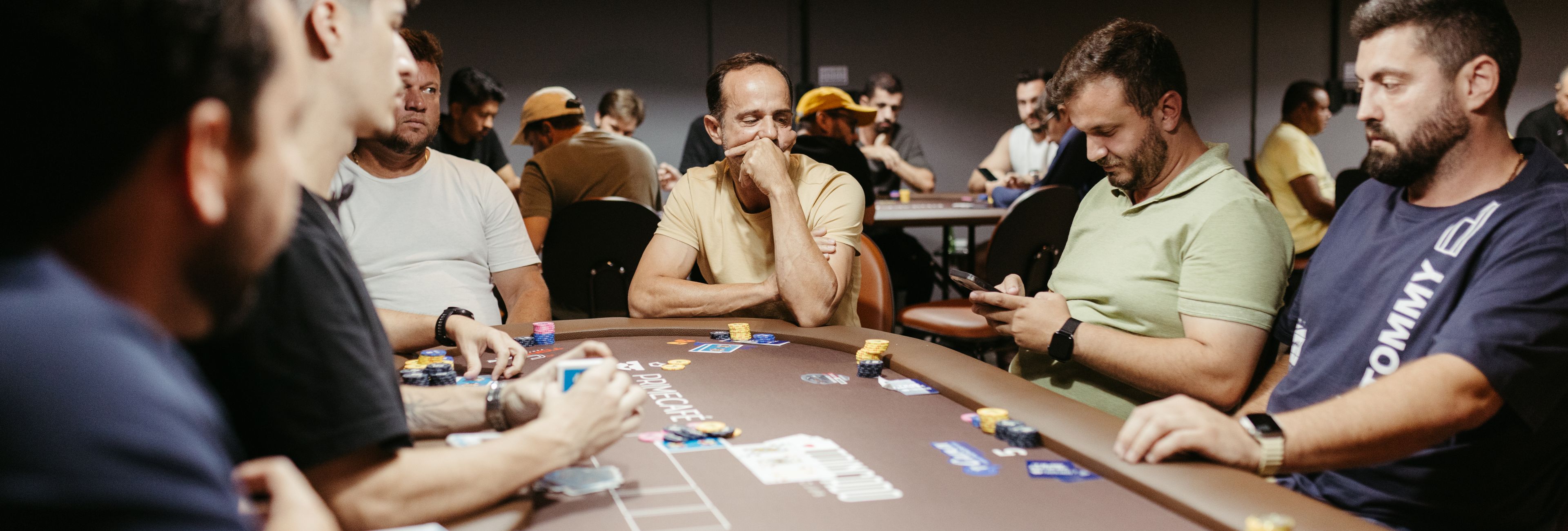
The Final Table Changes Everything You Think You Know About Poker
You have been playing poker for hours. You have watched players bubble out. You have survived coolers, bad beats, and that one caller who always seems to have it. And now you are sitting at the final table with your stack, your seat, and your tournament life on the line.
Here is what most players do not understand: the final table is not just another stage of the tournament. It is a completely different game operating under different mathematics, different incentives, and different psychological pressures. The chip stack you spent eight hours building behaves differently when the prize jumps are worth five, six, even seven figures. The ranges that worked at six tables do not work here. The aggression that accumulated your chips now carries existential consequences.
Your MTT final table strategy is not about playing the same game tighter. It is about recognizing that the game has fundamentally changed and adjusting every single decision accordingly.
ICM Is Not a Theory. It Is the Law of the Final Table.
Independence Chip Model pressure is the defining feature of final table play, and if you are not thinking about it on every single hand, you are bleeding expected value in ways that will cost you tournament after tournament. ICM tells you exactly how much your stack is worth in real dollars based on payout structure. At the final table, because the jumps between finishing positions are enormous, your chips lose significant value relative to their nominal tournament stack value.
Consider this scenario. You have 25 big blinds. The next payout jump pays $50,000 more than the position below you. Your stack might be worth $120,000 in chips, but in ICM terms it might be worth $95,000 in actual equity because folding preserves more of that equity than calling off in marginal spots. This is why players at final tables often fold hands they would snap-call earlier in a tournament. The math has changed. The penalty for losing your stack is much steeper.
The practical application is simple: you need to be more selective about calling all-ins, especially from short stacks. The person moving all-in with 12 big blinds is not just betting their tournament life. They are betting yours too. Your call needs to be significantly stronger than it would have been at the same stack size in the middle stages of the tournament.
Short stacks at the final table should be exploiting this dynamic. When you have 8 big blinds and three players behind you with 40+ big blinds, those big stacks are under enormous ICM pressure to fold. The $50,000 difference between 9th and 8th place means they will often fold even Ace-Ten suited. You are not just stealing. You are stealing from players who literally cannot afford to call with their normal range.
Stack Sizes Define the Agenda at the Final Table
The distribution of stacks at the final table dictates what kind of poker you will be playing. Three distinct game states emerge and each requires a completely different approach.
When stacks are deep, meaning 40 big blinds or more across most of the table, you are still playing real poker. You have room to maneuver, to set mine, to play positional strategies, to build pots with semi-bluffs. The final table plays much like a late-stage final table in a deep-stacked event. Your edge is in post-flop play, in extracting value, in making the best decisions on boards that interact with your range in complex ways. In this environment, you want to play pots. You want to get to the flop with position. You want to apply pressure on players who are ICM conscious but have enough stack to play back.
When stacks are medium, between 20 and 40 big blinds, the game shifts toward pre-flop and flop heavy decision making. Post-flop play is compressed. Players cannot afford to call three streets with marginal hands. The range of hands that can profitably continue narrows. In this zone, your big stack can be an absolute weapon. Players who are ICM frozen, meaning they are too aware of the penalty for losing chips, will overfold. They will fold Ace-Queen to a short stack all-in because they cannot stomach the thought of bubbling in 9th place. You need to be punishing this.
Short stacks under 15 big blinds are in survival mode but also in opportunity mode. Their range for moving all-in is extremely wide because the math of open-shoving favors any hand with decent card strength and any Ace, any suited connector down to 54 suited, any pair. They are not playing poker anymore. They are playing lottery and they know it. Your decision with a medium stack is whether to call and potentially bust them, gaining significant chips and payout equity, or fold and let them survive while your own ICM position remains solid.
The key insight here is that you should not be applying one strategy at the final table. You should be reading the stack distribution and playing the game state that best suits your stack while exploiting the games states of your opponents.
Position Is Worth More Than You Think at the Final Table
Position has always mattered in poker, but at the final table it becomes magnified because of the compressed stack sizes and the ICM stakes involved. When stacks are 30 big blinds and action goes three-way to the flop, the player on the button has all the power. They can bet, check, or check-raise. They have the last word on every street unless someone shoves. The player in the big blind is defending a static position, reacting rather than initiating.
You should be fighting aggressively for button position at the final table. When you are on the button, your steal range can widen significantly because players in the blinds are under maximum ICM pressure to fold marginal hands. The cost of calling an open-raise from the big blind is not just the chips. It is the risk of finishing 8th instead of 7th, of busting when the payout jump is massive.
When you are in the blinds, the situation is reversed. Defending too wide will erode your stack. The hands you defend should be strong relative to the open-raiser's range and should have good post-flop playability. Defending with junky suited connectors because "you have good odds" ignores the fact that you are playing against an opponent who knows their stack value is on the line and who will apply maximum pressure post-flop if they sense weakness.
Players in middle position have a specific challenge. They have the worst of both worlds: not enough positional advantage to play as freely as the button, but enough stack to be a real target for the big stacks above them. In middle position, your range should be tighter and more value-oriented. You are the player other players want to isolate. Do not make it easy for them.
Exploiting the Exploits: Reading Your Opponents at the Final Table
Final table players come in distinct psychological profiles and you need to identify each one within the first five hands. The first type is the ICM zombie. This player has read about ICM pressure and now makes robotic folds at the wrong times. They fold Ace-King to a 10 big blind shove from a player they consider "short" but who actually has 25 big blinds. They check-fold rivers with second pair because "I do not want to get called by a better hand." They are bleeding chips through folding. They are the best target at the table.
The second type is the fearless gambler. This player does not care about payout jumps or ICM. They play every hand as if it is the first hand of the tournament and their only goal is to double up. They will call all-ins with Ace-Five offsuit because "I do not want to fold." They are also exploitable, but in a different direction. Against them, you want to be the one with the nuts or close to it. Do not slow-play against a player who will call with any Ace. Value-bet relentlessly. Do not try to trap. They are not playing a range-based game. You do not need to trap them in a range-based way.
The third type is the skilled operator. This player is playing correct ICM-aware poker, making good fold decisions, applying pressure strategically, and not giving away chips unnecessarily. They are the hardest to play against. Your best edge against this player is position and post-flop execution. Do not try to out-bluff them with high-frequency aggression. Play solid, make fewer mistakes, and let them make the big ICM fold that occasionally goes wrong.
The fourth type is the desperate short stack. They have been one good double-up away from being irrelevant all day and now they have 6 big blinds. Everything is on fire and they know it. Their shoving range is wide but not random. They have been waiting for hands and now they are moving. This is exactly when you hold their feet to the fire. Your medium stack should be calling with a tight but profitable range against their shove. You want to be the person who busts them. The equity you gain from knocking out short stacks at the final table is enormous because you remove players who would otherwise be stealing from you.
Heads-Up Preparation: Winning the Final Two
Most final tables end with heads-up play. If you are one of two players remaining, the game changes again. ICM no longer applies in the same way because you are playing for the title and the difference between first and second is a fixed prize amount rather than a series of jumps. Every chip you win has the same value as every chip you lose. This is the moment where your stack becomes just a stack again.
Heads-up play at the final table stage is almost entirely about pre-flop ranges, 3-bet or fold dynamics, and the willingness to put pressure on your opponent when you have position. If you have a significant chip lead, you should be applying constant pressure. Your opponent, who just busted five players and survived a brutal final table, is exhausted and probably short-stacked. Do not give them breathing room. Raise often, bet often, and make them make hard decisions with their last chips.
If you are short in a heads-up match, your strategy is more specific. You are looking for spots where your opponent folds. You are raising with a wide range from the button because their fold percentage heads-up is much higher than it was when they were 60 big blinds deep. You are not trying to outplay them. You are trying to out-steal them while picking your spots to get it in good.
Skill in heads-up play comes down to one thing: who makes fewer mistakes when the stakes are highest. Your pre-flop game needs to be tight and balanced. Your post-flop play needs to be aggressive when you have the lead and foldable when you do not. Do not go to showdown with Ace-high if your opponent is showing aggression and you have no backdoor draws. Recognize that heads-up is a game of ranges and your decisions should be based on what your opponent's range looks like in each spot, not on what your specific hand feels like.
The Single Most Important Final Table Decision You Will Make
Every final table decision breaks down to one question: are you trying to survive, or are you trying to win?
Survival mode is appropriate when you are the shortest stack and the payout jumps are such that a 9th place finish changes your life more than a 7th place finish. In this mode, you are folding more, playing tighter, avoiding confrontations that put your tournament life at risk. You are not trying to build a stack. You are trying to ladder.
Winning mode is appropriate when you have enough chips to be a threat and the first place prize is meaningfully different from the alternatives. In this mode, you are taking calculated risks, applying pressure, and playing to bust players rather than to survive. You are using your stack as a weapon and you are not folding your way to a payout that does not excite you.
The mistake most players make is choosing survival mode when they should be in winning mode. They have 20 big blinds, which is not short. It is playable. But they start folding everything, letting the short stacks steal, letting the big stacks dictate the pace, and before they know it they are 8 big blinds and the game is over. Do not let the final table intimidate you into folding a winning position.
Your final table strategy is the sum of all these adjustments working together. ICM awareness, stack-aware play, position exploitation, opponent reading, and knowing when to shift from survivor to executioner. The players who win tournaments are not the ones who played it safe at the final table. They are the ones who made better decisions when the decisions mattered most.