Tournament Bubble Strategy: Master ICM Pressure in 2026
Navigate critical bubble situations with precision. Learn how to exploit opponents and protect your stack using ICM pressure at tournament stages where every chip matters.

The Bubble Is Where Tournaments Are Decided, Not at the Final Table
Most players treat the tournament bubble like a normal stage of the tournament. They play their hands, make standard raises, and wait for something to happen. This is exactly why they bubble. The bubble is not a normal stage. It is a mathematical pressure cooker where the value of your chips shifts dramatically based on position, stack size, and the actions of players around you. Understanding Tournament Bubble Strategy means understanding that the chips in your stack are worth more dead than alive when you are one elimination away from the money.
Independent Chip Model pressure, commonly called ICM, is the reason your AJ suited becomes a fold in certain bubble situations. It is the reason a player with 8 big blinds will open-shove most of their range while a player with 25 big blinds might flat-call with hands they would normally raise. The math does not care about your tournament life narrative. It cares about equity distribution across the remaining paid spots. If you are not thinking in these terms on the bubble, you are leaving money and tournament equity on the table.
Let me be direct. If you are playing tournaments in 2026 and you are not adjusting your bubble strategy based on ICM, you are playing a different game than the players who are cashing consistently. This is not advanced theory. This is the baseline expectation at any serious tournament table. The players who have mastered Tournament Bubble Strategy are the ones who extract maximum value from every situation while opponents fold out of fear or push with garbage because they do not understand the math.
Understanding ICM and Why the Bubble Amplifies Its Importance
ICM converts your chip stack into a monetary value based on the probability of finishing in each paid position. On the bubble, this conversion becomes brutal because the jump from an empty return to a min-cash is enormous. In a typical tournament structure, the difference between 181st place and 180th place might be hundreds of dollars or more. That single paid spot carries massive weight in the ICM calculation.
Here is what this means in practical terms. Suppose you have 15 big blinds in middle position with the payouts structured so that the min-cash is worth 20 times your current stack. If you call an all-in from a player with 10 big blinds and lose, you lose everything. If you win, you double your stack but your tournament equity does not double. It increases by a percentage based on how that new stack size maps to payout scenarios. This is the fundamental asymmetry of bubble play. Losses are catastrophic relative to gains.
Players who ignore this asymmetry make two consistent mistakes. First, they call too wide against short stacks because they see pot odds without calculating the ICM penalty of losing. Second, they fold too tight with medium stacks when they should be applying pressure to shorter stacks who cannot call correctly. Tournament Bubble Strategy is about exploiting this knowledge gap in your opponents while avoiding the traps they set for you.
The Stack Size Spectrum on the Bubble
Your optimal bubble strategy changes depending on where your stack sits relative to the field. This is not a minor adjustment. It is a complete strategic overhaul. Let me break down each range.
The short stack, defined as 5 big blinds or fewer, has the simplest decision tree. You are going all-in or folding. Your ICM considerations are straightforward. You want to get your chips in when you have the best chance to double up and when your opponents are most likely to fold due to their own ICM concerns. The ideal situation is when the player to your left has a medium stack and cannot afford to call and risk elimination. Your shoving range in this spot should be wider than it would be in a cash game because the fold equity is amplified by bubble pressure.
The medium stack, between 10 and 25 big blinds, faces the most complex bubble decisions. You have enough chips to apply pressure but not enough to survive a bad call. Your raising range should be selective. You want to target players with fewer big blinds than you who are closer to the bubble burst. You want to avoid raising into stacks large enough to call and knock you out. The players you should be raising are the ones for whom calling your raise creates an ICM disaster. These are the players who fold too much because they are desperate to ladder up.
The large stack, with more than 30 big blinds, has a different perspective. Your ICM losses hurt less because you have enough chips to survive a double-up or to ladder if the situation deteriorates. You can apply maximum pressure on the bubble because your opponents know that knocking you out is nearly impossible while you can still eliminate them. Your open-raising range should be wider in these spots, particularly against players who are ICM locked and cannot call without destroying their equity.
Position Becomes Power on the Bubble
In no other stage of a tournament does position matter more than on the bubble. The player acting last has a massive informational advantage. They can watch every fold, observe who is tight and who is loosening up, and make their decision accordingly. This is why the button and the cutoff become the most valuable seats on the bubble.
When you are in late position on the bubble, your Tournament Bubble Strategy should include a systematic exploitation of the players in the blinds. The small blind and big blind are in the worst positions. They have already committed chips, they face potential elimination, and they have limited ability to see how the table is evolving before acting. When a short stack shoves from early position and the action folds to the small blind, that small blind is in agony. They can call and risk immediate elimination or fold and feel the pressure of the bubble closing in.
Your late position advantage allows you to size up these situations before committing. If the small blind is an amateur who plays his tournament life like a cash game, they might call too wide. If they are a seasoned player, they might fold everything except premium hands. You adjust accordingly. But the key point is that you are making an informed decision while they are making a desperate one. That is position working for you on the bubble.
Solving the Calling Range vs Raising Range Problem
One of the most common questions in bubble play is whether to call a short stack all-in with a medium stack or to raise and potentially face elimination from a larger stack. This is the core tension in Tournament Bubble Strategy and it requires a framework rather than a rule of thumb.
The calling range in bubble situations should be narrower than most players think. You are calling to eliminate a player who is already short. The value you gain from eliminating them is offset by the risk of a larger stack behind you who can call and potentially knock you out. If a player with 40 big blinds is behind you and can call your raise, your situation changes dramatically. You might be trapping yourself between a short stack you cannot eliminate and a large stack that can eliminate you.
The raising range should focus on players you can actually knock out. If you have a medium stack and the player in the hand has fewer big blinds than you, your raising range can be wider because you have the stack advantage. If the player has more big blinds, your range should be narrower because you are risking more relative to the situation. The exception is when you have position and the player behind you is short. In that case, you can raise with a wide range because the short stack behind you cannot call without ICM suicide.
Live Tournament Bubble Adjustments You Cannot Ignore
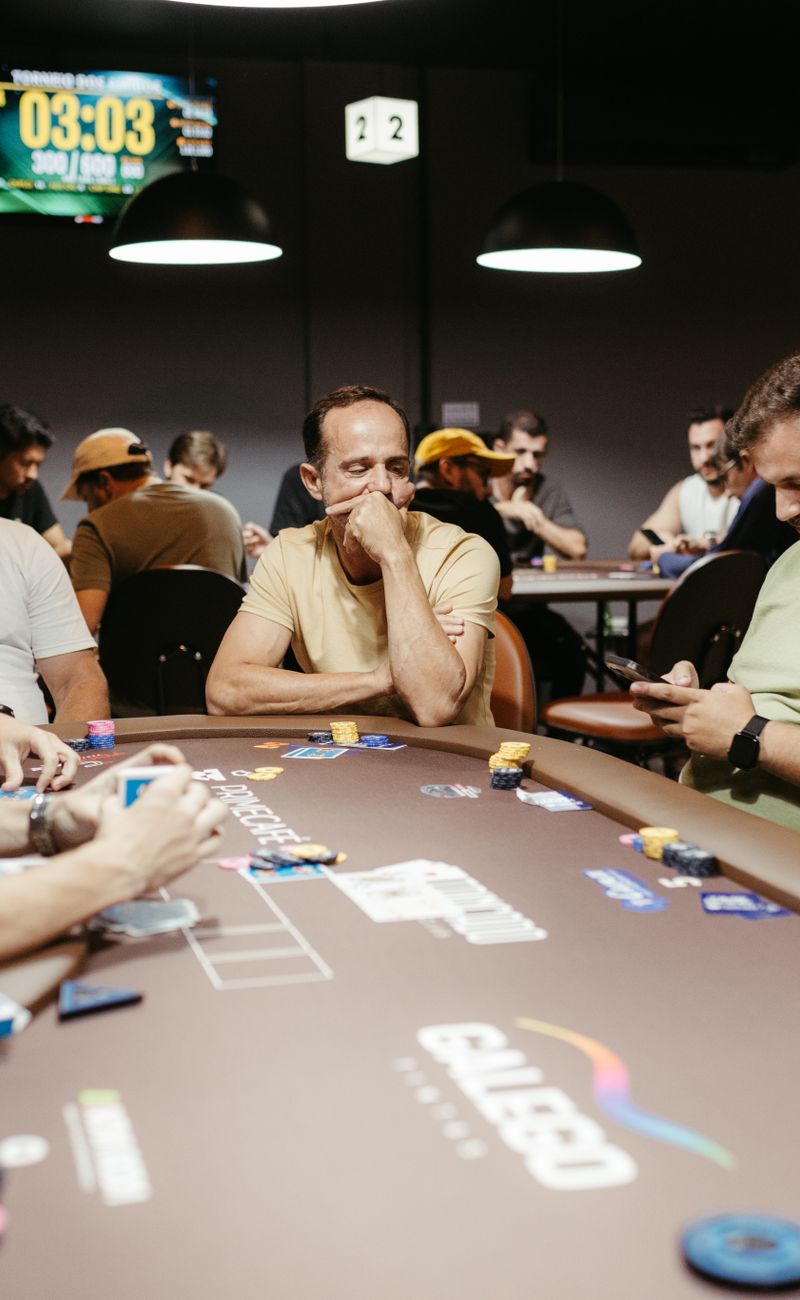
Online bubble play has become increasingly solved. Strong players adjust automatically and the fish have mostly learned not to donk their stack into a short stack shove. Live tournament play is different. Live players are reading physical tells, they are influenced by the crowd, and they often make decisions based on narrative rather than math. This creates massive opportunities if you know how to read the room.
In a live setting, watch for players who are counting their chips obsessively. These players are ICM aware but likely overcorrecting. They will fold too often when short stacks push. Watch for players who are not paying attention. These players are likely not thinking about ICM at all and will call with garbage or fold premium hands out of confusion. Your Tournament Bubble Strategy in live settings should include a player reading component that does not exist online.
The most important live bubble adjustment is understanding the crowd and the pay jump. In a tournament where the min-cash is a life-changing amount for the players remaining, the bubble will be tighter than in a tournament where the min-cash is a minor bonus. Adapt your pressure accordingly. In the former scenario, your short stack shoves will get through at a higher rate. In the latter, players will call lighter because the payout jump is less dramatic relative to their lives.
The Hard Truth About Bubble Play
Here is what nobody wants to hear. Most of your bubble mistakes are not strategic. They are emotional. You know the right play. You know that calling with queen-jack offsuit against a short stack shove is ICM negative. You know that your 18 big blind stack should be raising wider against the player with 8 big blinds. You know all of this and you still fold because you cannot stomach the thought of bubbling after playing well for four hours.
Tournament Bubble Strategy is 20 percent math and 80 percent discipline. The players who consistently cash tournaments are not smarter than you. They have simply learned to execute the mathematically correct play even when their hands are shaking. They have learned to let go of narrative. They have learned that bubbling is not failure. Bubbling with a -EV call is failure. Bubbling because you made the right play and got unlucky is just poker.
Study the spots. Memorize the stack-to-payout correlations. Practice bubble push-fold decisions until they are automatic. And when you get to the bubble in your next tournament, remember that the player across from you is feeling the same pressure. The question is who executes their game plan better. Make sure it is you.