MTT Final Table Strategy: Play Like a Pro at the Big Stage (2026)
Master the critical decisions at the MTT final table including stack-to-pot dynamics, opponent exploitation tactics, and ICM pressure points for maximum success.
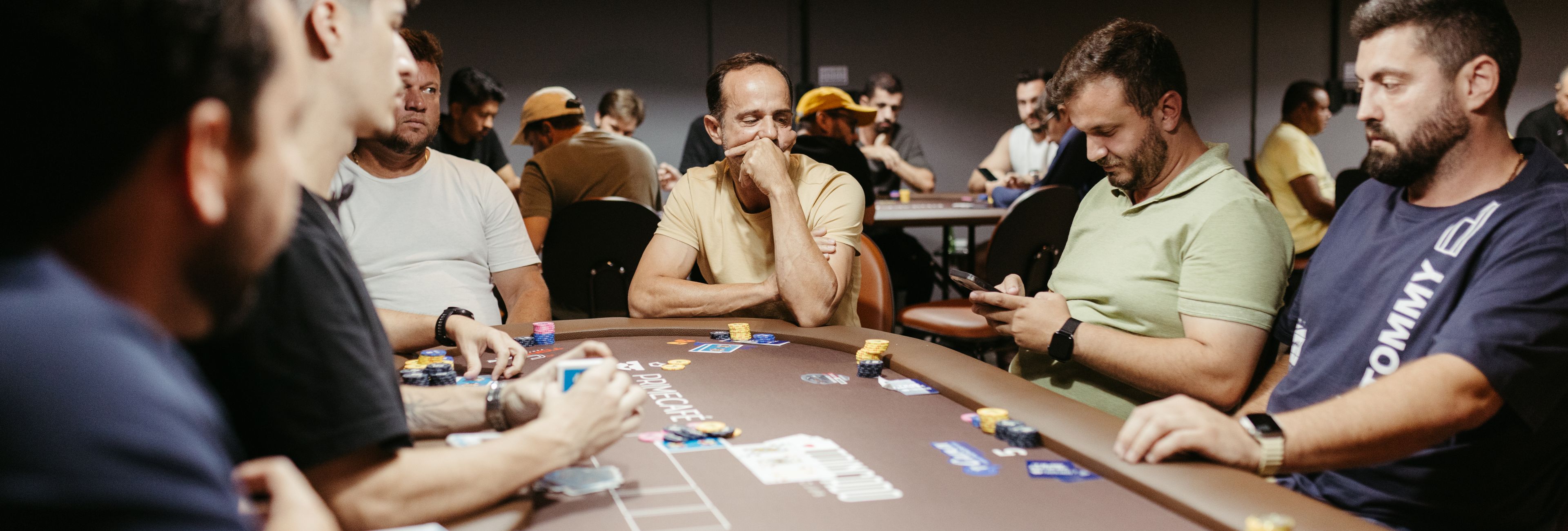
The Final Table Is Where Poker Careers Are Made or Ruined
Most players spend hundreds of hours studying GTO ranges, watching training videos, and grinding through thousands of hands at smaller stages of a tournament. Then they reach the final table and suddenly forget everything they know. They tighten up for no reason. They overthink simple spots. They play scared money against opponents who have just as much to lose. If you want to play MTT final table strategy like a professional, you need to understand that the final table is not a continuation of the middle stages. It is a completely different game with different math, different dynamics, and different pressure points that will expose every weakness in your mental game.
The money jump from ninth place to first is almost always massive. In a $1,000 buy-in tournament with 1,000 entrants, the difference between ninth and first could be 10x or more. This is not abstract math. This is your life-changing money sitting in the middle of the table. Understanding how to navigate these payouts is the foundation of every decision you make once you reach the final table. Players who ignore payout structure and play the same way they played at 50 players remaining are leaving significant edge on the table.
Your MTT final table strategy must begin with a clear-eyed assessment of the stack-to-payout ladder. Every decision from this point forward carries increased weight because the money jumps between positions are substantial. A player with 15 big blinds who folds a marginal hand and later doubles up is still alive for a huge payout. That same player who calls off their stack with a marginal hand because it "felt right" could be knocked to the rail in a spot where folding was clearly superior based on the math alone.
ICM Pressure Reshapes Everything You Thought You Knew About Ranges
Independent Chip Model pressure is the single biggest factor that separates final table play from earlier stages. Most recreational players understand ICM in theory. Very few truly internalize how aggressively it should reshape your calling ranges, your 3-betting ranges, and your overall aggression patterns when big money is on the line. In the middle stages of a tournament, you can afford to take calculated risks because the penalty for being wrong is losing your tournament life but not dramatically affecting your expected value in terms of actual dollars. At the final table, those two things are the same thing because the payout jumps are so large.
When you are 12th in chips at a 100-player final table in a major online series, the difference between 12th and 10th might be a few hundred dollars. At the official final table of nine players, the jump from ninth place to eighth place is often larger than all the payouts you have earned so far in the tournament. This means that players who are short-stacked should be dramatically more willing to let hands go that they would happily call with in an earlier stage. The math is simple and brutal. If calling costs you your tournament life and the payout difference between your current position and the next payout jump is $50,000, you need a hand with significantly more equity than you would need in a spot where the payout difference is $1,000.
Your MTT final table strategy must account for how ICM affects each player's incentive structure. The chip leader has the least to lose by playing aggressively because they are already guaranteed a massive score. They should be expanding their raising ranges and looking to apply pressure to shorter stacks who are priced in to fold. The short stacks should be narrowing their calling ranges dramatically and only continuing when they have hands strong enough to comfortably stack off against the likely range they are facing. The middle stacks have the most complex decisions because they are sandwiched between players who want to eliminate them and players they can potentially eliminate.
Solving these spots by hand is nearly impossible. You need either a solid understanding of ICM principles backed by years of experience, or you need to be running quick ICM calculations in real time. The players who consistently make money at final tables are the ones who have put in the work understanding how payout structure affects optimal strategy in these specific spots. They know that the same hand that is an easy call at 30 players remaining becomes a fold at 9 players remaining because the math shifted underneath them.
Adjusting Your Range: What Stays the Same and What Must Change
Your opening ranges should not change dramatically at the final table unless you are playing against opponents who have shown a pattern of folding to pressure. If anything, the chip leader should be opening wider because the players behind them are squeezed by ICM pressure and will fold more often than they should. The short stacks should be folding more of their weak hands because they cannot afford to play speculative holdings that need to flop well in order to continue. This is counterintuitive to many players who assume that short stacks should be playing every hand aggressively. Short stacks should be selective about which hands they commit with because they are priced in to fold by the players who act behind them.
Continuation betting patterns need to be evaluated differently at the final table. With nine players remaining instead of hundreds, your opponents have had more time to observe your tendencies. If you have been c-betting too frequently, smart opponents will adjust and start floating or raising your c-bets more often. If you have been playing conservatively, aggressive opponents may start stealing more aggressively. The dynamics are more personal and more exploitable because the player pool at the final table is smaller and more aware of each individual's patterns.
Multi-way pot dynamics change significantly when you are playing against five, six, or seven opponents at the final table compared to a heads-up pot. Players who habitually over-bet multi-way pots because they are trying to push people off hands are leaving money on the table. At the final table, your opponents have deep stacks relative to the pot size and are less likely to fold to large over-bets when they have strong hands. Sizing should be more balanced across different hand strengths because your opponents are paying closer attention and adjusting their ranges accordingly.
Exploiting Tendencies at the Final Table: Reading the Room Correctly
The final table is a small, closed ecosystem. You have been playing with these players for hours or days. You have information on their tendencies that you could never gather in a larger field. This is where your MTT final table strategy should heavily incorporate exploitative adjustments. If you have been at the table with a player who folds too often to 3-bets, you should be 3-betting them more with hands that would otherwise be folds. If you have been watching a player who cannot fold top pair on dangerous boards, you should be betting those boards more heavily with your value hands and adjusting your bluffing frequencies accordingly.
Stack sizes at the final table often create artificial dynamics that are ripe for exploitation. When one player is extremely short and another player has a massive stack, the short player is often forced to either double up or bust out. This creates spots where the big stack can apply enormous pressure with a wide range because the short player is priced in to fold many of their hands. However, the short player should also recognize that other medium stacks may be reluctant to play pots against them because eliminating them could trigger another player to become the short stack, changing the table dynamics dramatically.
Reading opponents at the final table is about pattern recognition and adjustment. You should be tracking which players respond to pressure appropriately and which players tilt or tighten incorrectly under stress. A player who has been rock tight for five hours and suddenly starts raising frequently likely has a real hand but may also be tilting. A player who has been aggressive throughout the tournament and suddenly goes quiet may have a premium hand and is trying to trap. These behavioral patterns become more reliable at the final table because your opponents have fewer distractions and more personal investment in the outcome.
Table image is a weapon that many amateur players completely ignore at the final table. If you have been playing conservatively and have a tight image, you can extract more value from your strong hands because your opponents will give you more credit. If you have been playing aggressively and have a loose image, you can bluff more effectively because your opponents know you are capable of raising with weak holdings. Your MTT final table strategy should leverage whatever image you have built throughout the tournament rather than trying to reinvent yourself at the final stage.
Mental Toughness and Execution Under Maximum Pressure
Your MTT final table strategy falls apart if you cannot execute it under pressure. This is where the gap between recreational players and professionals is most visible. Every player at the final table has enough skill to be there. The players who win are the ones who can maintain their decision-making process when the stakes are highest. Tilt control, emotional management, and the ability to think clearly despite adrenaline are skills that separate consistent winners from one-time deep finishers.
One of the biggest mistakes players make at the final table is overthinking spots where they have already made a decision. They fold a hand and immediately second-guess themselves, which poisons their mental state for the next decision. They call with a hand and start calculating whether they should have folded before the next card comes, which prevents them from playing the hand properly post-flop. Mental compartmentalization is not optional at the final table. You must be able to make a decision, commit to it fully, and move on without emotional residue contaminating your future decisions.
Physical tells become more relevant at the final table because you are often playing in person rather than online. Professional players are trained to pick up on small behavioral patterns that reveal the strength of their opponents' hands. A player who suddenly sits up straighter when the flop comes in has likely connected with the board. A player who looks away when a bet is made may be considering whether to call with a marginal hand. These reads are not reliable in isolation but they become powerful when combined with your knowledge of each opponent's baseline behavior and tendencies.
Fatigue is a silent killer at final tables. Major live tournaments often feature final tables that run late into the night or across multiple days with breaks. Your cognitive function degrades significantly after extended play. The players who have routines for managing fatigue, staying hydrated, and maintaining focus are the ones who continue making good decisions in the crucial moments. Simple things like stepping away from the table for a brief break before heads-up play, eating properly rather than relying on casino food, and staying mentally engaged rather than drifting into autopilot are all part of professional-grade MTT final table strategy.
The Final Table Is Not the Time for Experimentation
Every decision at the final table should be grounded in preparation, math, and pattern recognition. There is no spot at the final table where the correct play is to "see what happens" or to make a move based on a feeling you have not tested. The players who consistently finish deep in major tournaments are the ones who have done the work beforehand. They have run ICM calculations for different stack configurations. They have studied payout structures and have a sense of what hands are worth calling or folding at various stack depths. They have watched thousands of hours of final table play and internalized the patterns that separate winning plays from losing plays.
The final table is where your study meets the pressure test. You can be the most theoretically sound player in the world and still lose if you cannot handle the mental side of playing for life-changing money. You can be emotionally rock solid but still finish ninth if you do not understand the ICM dynamics that govern every decision at this stage. The synthesis of theoretical knowledge, exploitative adjustments, and mental discipline is what makes a professional-grade player at the final table.
Go study your ICM. Go review past final tables you have played in and identify where you deviated from sound strategy. Go build a mental framework for how you will approach different stack configurations and opponent types. The final table will come whether you are ready or not. When it arrives, the players who have prepared will play like they belong there. The players who have not will be along for the ride. The difference is entirely in your hands.