Poker Exploitative Play: How to Adjust Strategy Against Any Opponent (2026)
Master the art of exploitative poker play by learning to identify opponent weaknesses and adjust your strategy accordingly for maximum profit.
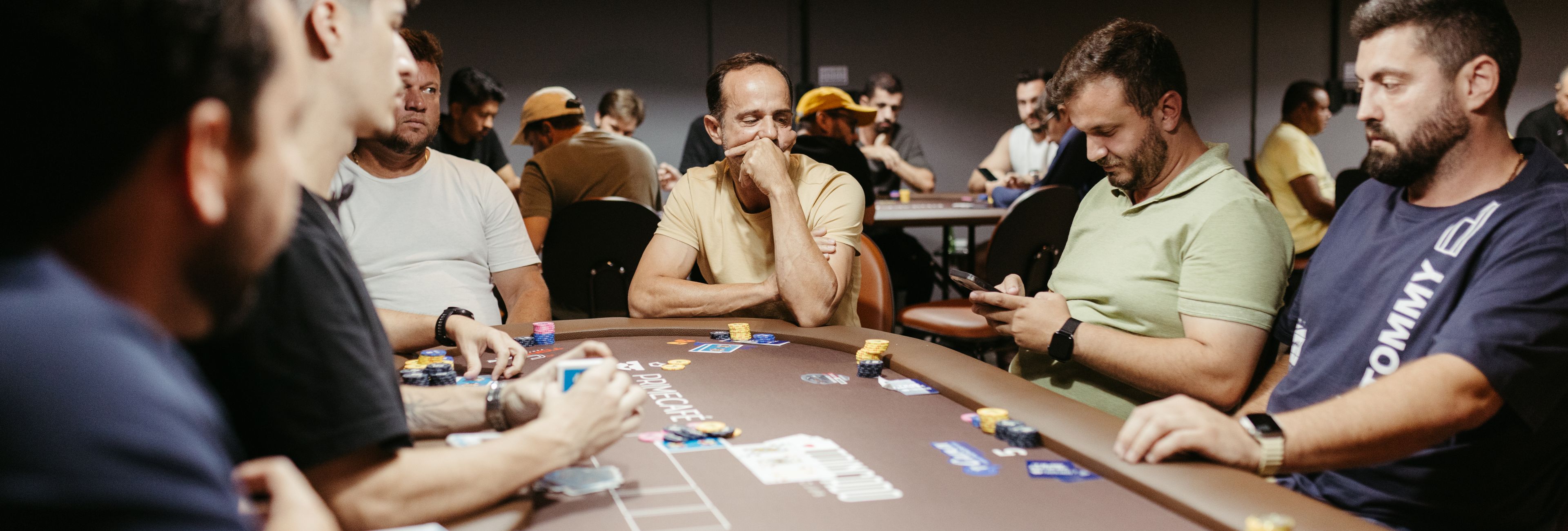
GTO Is a Foundation, Not a Finish Line
Your poker journey probably looked like this. You learned the rules. You read a few books. You started grinding. Somewhere along the way someone told you to study GTO and you spent months running solver outputs wondering why your win rate was not climbing the way the theory suggested it should.
Here is what nobody told you plainly. GTO is astarting point. It is the equilibrium strategy that makes you unexploitable in theory. But you are not playing against theory. You are sitting at a real table with a real person who has real tendencies, real leaks, and real fears. Exploitative play is how you take money from players who are not thinking at a solver level. And frankly, that describes most of the field at every stake you will ever play.
This article is not anti-GTO. Understand that before you click away. Solvers gave us a massive gift by teaching us what balanced strategy looks like. But if you are playing 2-5 NL and below, your edge comes from reading opponents and making targeted adjustments, not from mimicking equilibrium play that assumes your opponents are also playing near-optimal poker. They are not. Adjust accordingly.
The players who consistently win at low and mid stakes are the ones who identify what their opponents are doing wrong and punish it ruthlessly. That is exploitative play. That is where your money comes from. Learn it, practice it, master it.
The Art of Reading Tells in Real Time
Before you can exploit anyone, you have to know what you are exploiting. This means you need a reliable system for categorizing opponents and tracking their tendencies. Most players do this poorly. They remember the big hands and forget the small ones. They notice when someone shows down a weird hand and conclude they are tricky, without actually tracking how often they are tricky versus how often they are just random.
Your first job is to build a mental database on each opponent. This starts the moment they sit down. Watch how they approach every street, not just the ones that matter. Watch when they tank. Watch whether they tank before they bet or after. Watch how they handle themselves when they miss draws versus when they hit them. These are not mystical tells. These are behavioral patterns that separate thinking players from autopilot players.
The fastest way to build this database is to categorize players along two axes. How tight or loose are they preflop. How passive or aggressive are they postflop. Every opponent you meet falls somewhere on this 2x2 grid and their tendencies in each quadrant tell you exactly how to adjust your strategy. A tight passive player plays too many hands and folds too much. A loose aggressive player plays too many hands and bets too much. A tight aggressive player plays few hands but applies pressure when they do. A loose passive player calls too much and rarely initiates.
Each of these player types has a specific exploit. Tight passive players fold to pressure. Loose aggressive players bluff catch with the right hands and let them burn money on their own. Tight aggressive players you trap or outplay postflop when they miss. Loose passive players you extract value relentlessly because they will pay you off with second best hands.
Do not get cute about this. Most players fit a type and you should treat them accordingly until they show you evidence otherwise. The player who has played 200 hands and shown down three bluffs is not suddenly a balanced GTO player. They are still tight passive or loose whatever they were before. Track, categorize, exploit.
Practical Adjustments Against Common Opponent Types
Let us get specific. Your standard strategy should be rooted in solid fundamentals. When you have no reads, play balanced, play tight, do not give away money to randomness. But the moment you have a read, you adjust. Here is how to adjust against the opponents you will actually face.
Against the nit who opens only premium hands, tighten your calling range and widen your squeezing range. When a player opens twenty percent of hands, you can call or 3-bet with anything reasonable. When they open eight percent, your calling range shrinks and your 3-betting range becomes polar. You either have the goods or you are taking their blind with a bluff. The nit will fold their opening range to 3-bets more often than they should because they are attached to their cards. Punish that.
Against the station who calls too much and sees too many flops, stop bluffing. This is the mistake I see more than any other. Players identify that someone calls too wide but then they try to outplay them by bluffing more on later streets. That is backwards. The station calls because they cannot fold. You exploit that by value betting thinner, by betting more streets for value, by putting their folding frequency at zero across every street. If they will call with bottom pair, bet them until they fold or show down bottom pair. Your bluffs should be reserved for when they have draws they can fold, not when they have garbage they refuse to fold.
Against the aggressor who bets too much and too often, the adjustment is to float more and check-raise more. These players are winning because they are putting pressure on weak players who fold too much. You neutralize them by refusing to fold mediocre hands when they bet, by floating flops with any reasonable hand, and by check-raising boards where their range is weak but their aggression is high. The aggressor who over-bets is usually weak when they over-bet. They are not balanced. They are charging at you with everything they have. Meet their aggression with calls and traps.
Against the scared money who folds too much postflop, dial up the aggression. These players will open, check call a street, and fold to any real pressure on later streets. Your job is to attack their weaknesses on every street where they exhibit fear. If they check back turns, bet the river. If they fold to continuation bets too often, continuation bet more. If they fold big hands on scary boards, bet those boards. The scared player has already shown you they cannot handle pressure. Apply it.
Against the calling station who also happens to be passive, your value betting range thickens considerably. These players will not raise you. They will not apply pressure. They will call, call, call and hope you miss. Your best line is to bet every street for value with any hand that can get called. They will pay you off with worse hands because they cannot bring themselves to fold a pair. Do not slowplay against these players. Get the money in the middle while they are still willing to call.
The Mistakes That Kill Your Exploitative Strategy
Exploitative play is powerful when it is based on solid reads. It is catastrophic when it is based on hunches. I need you to understand this distinction clearly because this is where most players go wrong. They play a few hands against someone, get impressions, and then build an entire exploit strategy on incomplete data.
First mistake is reacting too fast. You see someone fold a continuation bet on the flop and you decide they are weak and will fold to pressure. You are right some of the time. You are also over-fitting to a single data point. The sample you need before making real adjustments is larger. You want at least twenty to thirty instances of a behavior before you adjust your strategy meaningfully. Until then, treat them as unknown and play your default line.
Second mistake is adjusting and then never unadjusting. The poker room is not static. Players change. Some tighten up after losing. Some loosen up after winning. Some develop tells over time that were not there initially. If you lock in an exploit and never refresh your read, you will eventually exploit a player who has changed their strategy or you will exploit a player who was never actually doing what you thought they were doing. Your reads should be dynamic. They should update as the session progresses.
Third mistake is confusing luck with tendency. A player runs hot for an hour and starts showing down crazy hands. You conclude they are a maniac who plays everything. That is not what you saw. You saw variance. When the variance corrects, they will be whoever they were before, probably tight and passive waiting for a hand. Do not rebuild your strategy around a session of good cards.
Fourth mistake is over-adjusting away from fundamentals. When you see a weakness, it is tempting to completely abandon your normal strategy and play something wild to exploit the weakness. Sometimes this works. More often you end up making yourself predictable or taking lines that lose money even when they exploit the specific tendency. The goal of exploitative play is to combine solid fundamentals with targeted adjustments. Not to replace fundamentals with hunches.
Your baseline strategy should be strong enough that if your read is wrong, you do not lose much. Your exploit should be targeted enough that if your read is right, you win a lot. That is the balance you are shooting for.
Building Your Exploitation Instinct
Exploitative play is a skill that develops with practice. It does not come from reading articles or watching videos. It comes from thousands of hours at the table where you observe, categorize, adjust, and evaluate the results of your adjustments. The good news is you can accelerate this process with deliberate practice.
Start by reviewing your own sessions with an exploitation lens. Go through your hand histories not to see if you got lucky or unlucky, but to see if you made the right adjustments based on what you knew about your opponents at the time. Did you identify the nit and 3-bet them? Did you identify the station and value bet? Did you identify the aggressor and float them? Or did you play every hand the same way because you were tired or distracted?
The players who improve fastest are the ones who take this seriously. They build notes on opponents. They review sessions specifically to look for missed exploits. They ask themselves after every session what they learned about their opponents that they did not know before.
You can also practice by watching other players. Live poker gives you the best view of this because you see people who have not been solvers-trained to death. You see their actual fears and hopes playing out in real time. Watch how the amateur at table four reacts to pressure. Watch how the regular who thinks they are good handles a check-raise. These observations build the database you need to exploit effectively.
Online you lose some of this information but you gain volume and hand tracking software. Use your hud. Track how often people fold to continuation bets. Track their aggression factor. Track their raise first in percentages. These numbers are not perfect but they give you a starting point for your exploitation decisions that goes beyond a single session impression.
Never stop learning about human nature. Poker is a game of imperfect information played by imperfect humans. The better you understand how people think and how they break under pressure, the better you will be at finding and exploiting their mistakes. Study psychology. Study behavior. Talk to people outside poker. Every new perspective on human nature makes you a better exploiter at the table.
The players who consistently win are not the ones who know GTO best. They are the ones who see what their opponents are doing wrong and capitalize without hesitation. Your opponent is leaking money right now. Most of them are leaking money every single session. Your job is to be the person who finds those leaks and fills them with your winnings. Study hard, play smart, and start exploiting.