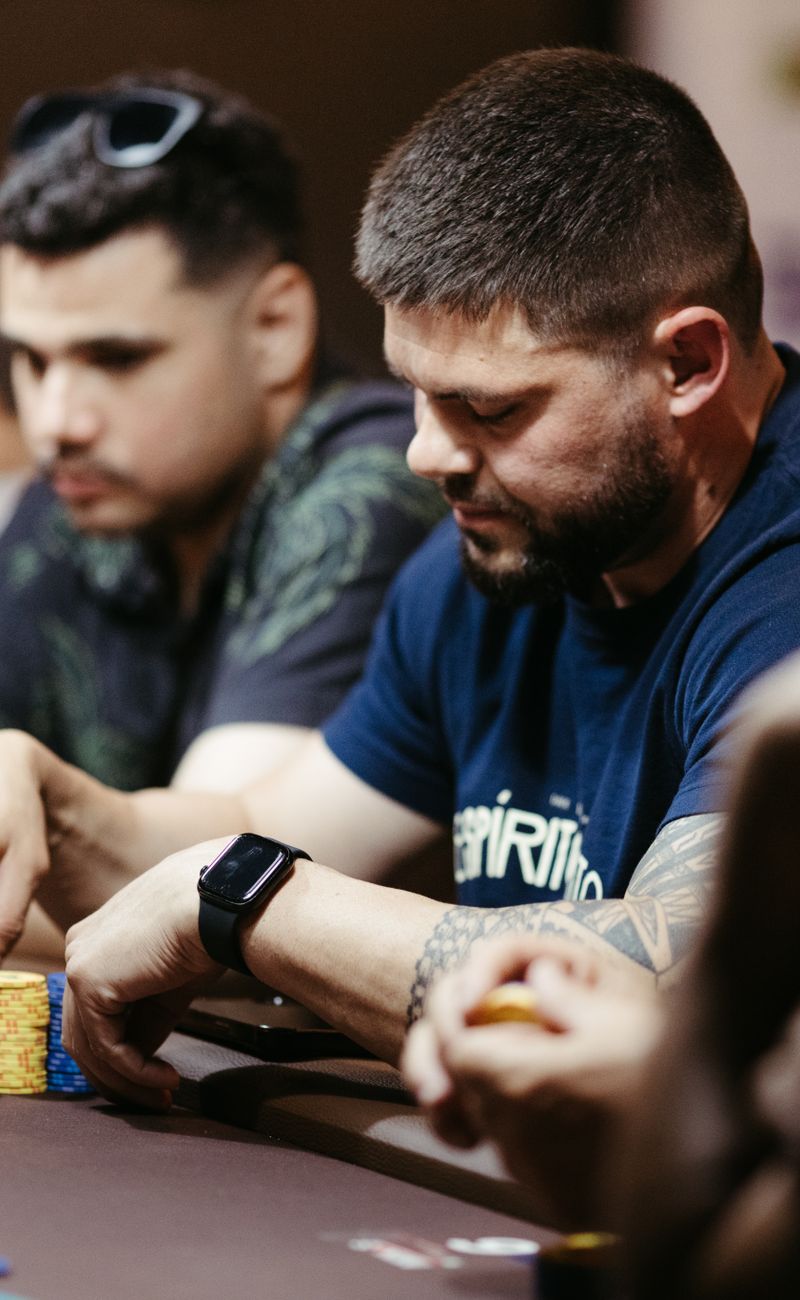
How to Read Live Poker Players: Essential Tells & Opponent Analysis (2026)
Master the art of reading live poker players with expert tells and opponent analysis strategies. Boost your win rate at live tables in 2026.

The Game You Are Not Watching: Why Live Poker Tells Still Win You Money
You are so focused on your cards that you are missing everything that matters. The stack of chips in front of your opponent is not random. The way he holds his cards, the speed of his check, the twitch in his shoulder before he raises. These are the data points that solvers cannot account for, and they are sitting there right in front of you, completely ignored.
Live poker tells are not superstition. They are observable data. Some players give away strong hands through physical leakage. Others reverse tell when they are bluffing. The timing of a decision, the angle of a gaze, the rhythm of breathing. If you are not cataloging these patterns in real time, you are leaving money on every table you sit at.
In 2026, the average live game is softer than it was five years ago. Players have YouTube educations but no live experience. They know abstract GTO concepts but they still tank for thirty seconds when they have a flush draw. This gap between theoretical knowledge and live execution is where live poker tells live. This article is about systematically identifying them, categorizing them, and using them to make better decisions at the table.
Physical Leakage: The Body Is Not as Stealthy as Your Opponent Thinks
The foundation of reading live poker players is understanding that physical tells are not random. They are autonomic responses that your opponent cannot fully control. When a player looks at his cards and his pupils dilate, that is not a choice. When he holds his breath after seeing a flop, his nervous system just betrayed him. Your job is to build a catalog of these involuntary signals and match them against the range of hands that would produce that response.
Start with the hand itself. How does your opponent hold his cards when he looks at them? A player who immediately looks away and sets them down casually usually has a weak hand. He is not excited by what he sees. A player who looks at his cards, then looks back at them a second time, then physically straightens in his seat often has a strong hand. That second look is a valuation check. The body is registering a pleasant surprise. You will see this most commonly with pairs, suited connectors that flopped well, or big cards that connected with the board.
Watch the shoulders. When a player picks up his cards and his shoulders rise slightly, that is tension. Tension often indicates strength. A player who slumps slightly or exhales often has a marginal hand that he is now disappointed about. This tell is subtle and you will miss it for months until you start specifically looking for it. Once you see it, you cannot unsee it.
Facial micro-expressions are real but overrated by television. You are not going to catch a player smiling because he has a set. What you will catch is a general state of ease or discomfort that persists throughout a hand. A player who looks relaxed and conversational with his stack out is often stronger than he appears. A player who has gone quiet and is staring at the board is often weaker. He is not calculating. He is hoping.
The most reliable physical tells come from betting actions, not card looks. How your opponent moves his chips tells you more than anything else. A player who bets quickly and smoothly almost always has a value hand. He is not thinking. He knows what he has and he wants the pot. A player who bets slowly, especially after using the tank, is often bluffing or protecting a hand that is vulnerable to being outdrawn. The slow bet is your opponent trying to look strong by taking his time, but he is overcompensating. The quick confident bet is the real strength signal.
Timing Tells: When Your Opponent Acts Tells You What He Has
The clock on your opponent's decision is one of the most undervalued sources of information in live poker. Every player has a baseline timing pattern. Some players act in two seconds every time regardless of hand strength. Others tank on every decision. You need to establish each opponent's baseline before you can use timing as a tell.
Once you know the baseline, deviations become signal. A player who normally acts in five seconds suddenly takes thirty seconds on a river call. That is not him thinking. That is him deciding whether to make an expensive hero call with a bluff catcher. You can put him on a narrow range and make your decision accordingly. A player who normally tanks but now snaps off a call or raise is almost always either trapping with a monster or making a move based on a specific read he developed during the hand.
The most exploitable timing tell is the quick check-raise. When a player checks quickly and then raises immediately after you bet, he almost always has a strong hand. He was not thinking. He was waiting. He checked because he wanted to let you bet, and he had the raise ready before you even acted. The timing here is artificially fast. He is not responding to your bet. He is executing a plan. Conversely, a slow check followed by a slow raise is often weaker. Your opponent took time to evaluate and decided to make a play. He may have a drawing hand or a bluff.
Watch the response time on the river specifically. River decisions are the most revealing because they carry the most weight. A player who takes a long time on a river fold is usually folding a hand that is not quite good enough but wanted to call. A player who calls quickly on the river usually either has the best hand and is relieved, or is making a crying call because he cannot fold. The quick fold is the real tell. When a player can fold quickly, he never had you beat. The hands that take time to fold are the ones that beat you or are very close.
Behavioral Patterns: What Your Opponent Does When He Is Not In the Hand
The tells that matter most often happen when your opponent is not even involved in the pot. Watch how players interact with the table when they have a hand. Watch how they behave when they fold. A player who folds quickly and then immediately looks at your hand is not interested in your cards for strategy. He is trying to confirm whether he made a correct fold. This is a player who second-guesses himself and can be bluffed on later streets because he will fold more than he should when he feels uncertain.
Stack management tells are underappreciated. How a player stacks his chips reveals comfort level with the game and the stakes. A player who neatly organizes his chips in denominations is often a more serious player. A player who keeps chips in a messy pile may be a recreational player who does not track his stack as closely. This matters for fold equity calculations. Recreational players with messy stacks often call too much because they are not fully aware of the price they are paying relative to the pot.
Social behavior tells are real but require calibration across demographics. Older players at lower stakes often have very different tells than young players who grew up watching poker on streaming platforms. Younger players are often better at masking physical tells because they have seen content about them. Older recreational players often leak more because they have not been exposed to that information. Adjust your expectations accordingly. A twenty-year-old reg who knows what a slow roll looks like is not going to give you that tell. A sixty-year-old retiree who just discovered poker might give you every tell in the book.
Watch how players respond to bad beats. A player who gets visibly upset after losing a big pot is often tilted for the next few orbits. Tilted players play faster, call more, and abandon sound strategy. They are the most profitable opponents at the table. A player who brushes off a bad beat and returns to a normal rhythm is more disciplined. You cannot tilt him by applying pressure. Know who you are targeting and adjust your bluffs accordingly.
Building Your Opponent Reading System: From Observation to Exploitation
Reading live poker players is not about catching a single magic tell. It is about building a probabilistic model of each opponent through accumulated observation. You need a system for what you are looking at and how you encode it. Without a system, you will forget what you saw and miss opportunities to exploit patterns.
The simplest system is a three-column mental model for each player. Column one is their baseline tendencies. How do they play when they have nothing? How do they bet when they are comfortable? What is their default behavior at each street? Column two is their strength tells. What physical or timing signals do they give when they have a strong hand? Column three is their weakness tells. What signals do they give when they are weak, bluffing, or tilting? You do not need to write this down in most games. You just need to internalize the framework so you are actively looking for these three categories of information on every hand.
The most common mistake players make with tells is over-indexing on them. A single tell is not enough to override the entire board texture, betting history, and range analysis. You use tells to refine your ranges, not replace your thinking. If a player quick-check-raises the flop and you have top pair, you do not auto-fold because he might have a set. You evaluate the board texture, your kicker, and the likelihood that he is representating a strong range. The tell is one input in a multi-factor decision. Used correctly, it tips the balance in close spots. Used incorrectly, it leads to hero folds against value hands.
Document your tells experiences mentally. The best live players remember specific hands where a tell was decisive and they build a mental library of these moments. After a session, briefly review the most important reads you made. Were you right? What tells confirmed or contradicted your read? This feedback loop is how you improve. Your tells reading ability compounds over time if you are actively learning from every session.
Start tonight. Pick one physical tell to specifically watch for in your next session. Do not try to read everything at once. Master one category first. Then add another. Within six months, you will see the game completely differently. The table will feel slower. You will have time to watch your opponents because you are not glued to your cards. The cards are not the game. The people across from you are the game.