Live Poker Tells: How to Read Physical Tells in Live Games (2026)
Master the art of reading live poker tells with this comprehensive guide to physical tells, betting patterns, and behavioral signals that reveal your opponents' hands.

Live Poker Tells Exist. Most Players Miss Them Anyway.
You have been sitting at a live poker table for three hours. You have been studying the board, calculating pot odds, running implied odds in your head. Meanwhile, the guy across from you has been telling you exactly what he holds for the last forty-five minutes and you have not heard a single word. This is the problem with modern poker education. You learned to use solvers, you memorized equilibrium strategies, you can tell someone exactly why their river call is mathematically indefensible. But you sit down at a card room and you are functionally blind. Live poker tells are real. They are exploitable. And most serious players are leaving money on the table because they never learned how to watch rather than calculate.
The irony is thick. You spent months drilling GTO until you could recite optimal mixed strategies in your sleep. Meanwhile, a recreational player is mumbling into his coffee cup every time he has a strong hand and you have not noticed because you are too busy pulling out your phone between hands. Physical tells in live games are not pseudoscience. They are not lucky guesses or table image nonsense from 2005 strategy books. They are observable behavioral data points that your opponents are involuntarily broadcasting every single orbit. The question is whether you are paying attention.
Why Live Poker Tells Matter More Than Ever in 2026
The live poker landscape has changed. Games are softer than they were a decade ago precisely because the internet grinder population has plateaued. The players who showed up to the casino after grinding 200NL online have already been sorted. What remains is a fascinating mix of old-school live players who have never touched a solver, young guns who learned poker on their phones and have weird tells nobody has catalogued yet, and recreational players who could not tell you what a blocker is but will absolutely look at their chips differently when they flop trips. Understanding live poker tells gives you an edge against exactly this population. You are not reading opponents to confirm what your range analysis already told you. You are reading opponents because your range analysis in live games is often incomplete. The player pool is not solving for equilibrium. They are playing their hand, not their range, and that makes their physical behavior a direct signal to you about their decision process.
Furthermore, the pace of live play means you have time to observe. Online, a decision comes at you in two seconds and you respond. At a live table, you have fifteen, twenty, sometimes thirty seconds to watch your opponent before they act. That time is not filler. It is information. The way a player uses that time, the way they position their body, the way they interact with their chips and cards, these are all tells that online poker has trained you to ignore because you never had the visual bandwidth to them. You do now. The question is whether you have developed the observational habits to use them.
The Hands Tell You Everything
Start with the most obvious category: what players do with their cards and chips. If you are not watching your opponents' hands during every street, you are missing the highest quality tells available. The fundamental principle is that strong hands and weak hands produce different muscular tensions, different levels of certainty, and different behavioral patterns. A player with a marginal hand will often handle their cards carelessly. They will toss them into the muck without looking at them again after a bet, or they will slide them back toward the dealer with a casual flick of the wrist. A player with a strong hand tends to exhibit more careful, deliberate card management. They may physically examine their cards more closely on later streets, reposition them in their hand, or place them precisely parallel to the table edge. This is not universal. Some strong players cultivate casualness to deceive. But the baseline human behavior is that we protect things we value and handle carelessly things we consider less important. Your poker hand is no exception to this psychological pattern.
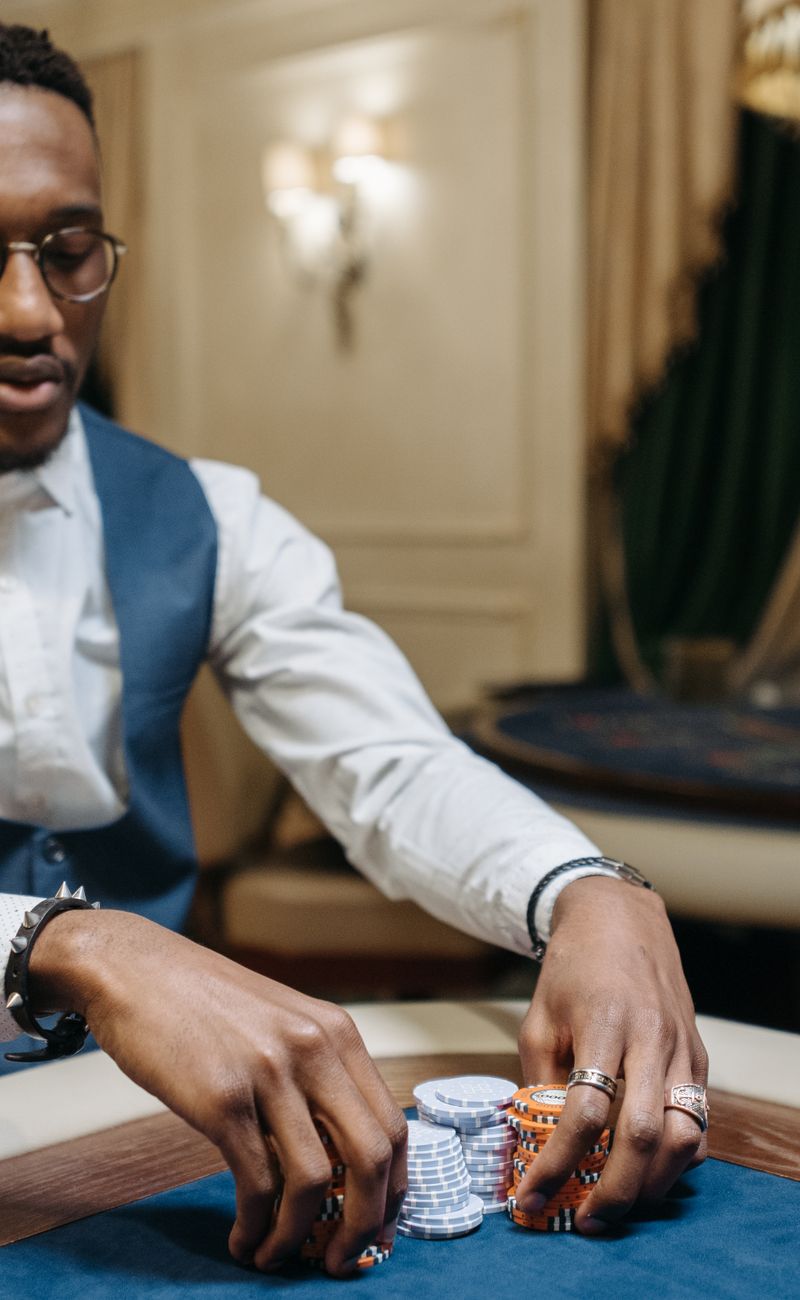
Watch the chip stack. When a player looks at their stack before acting, pay attention to whether they are counting or merely glancing. A weak hand facing a bet often produces a quick, almost dismissive glance at the stack, as if the player is already calculating how much they will lose. A strong hand produces a more thorough examination, often accompanied by physical rearrangement of chips, stacking, restacking, sometimes even fanning them out and then re-stacking them. The player with a strong hand is imagining winning. They are planning. The player with a weak hand is hoping to find a reason to fold and their stack examination is really just a delay tactic while they look for an escape route.
The grip on chips tells a story. Players holding strong hands often develop a tighter, more controlled grip on their chips. They may stack them with more precision or hold a chip between their fingers with a kind of proprietary possessiveness. Players with weak hands often display a looser grip, may fidget with chips without purpose, or may set them down more lightly. One of the most reliable tells I have observed over years of live play is the chip-clenching jaw. Players concentrating on a big decision will sometimes clench their jaw visibly. When the decision is made and they feel good about it, the jaw loosens. When they are in trouble, the tension remains longer. Watch faces, not just hands.
Behavioral Patterns and Timing Reveal Decision Confidence
Live poker tells are most reliable when you are reading patterns of behavior across multiple hands rather than making snap judgments on single observations. The foundation of effective tell-reading is establishing baseline behavior for each opponent. What does this player look like when they have a normal hand? How do they sit? Where are their elbows? How do they interact with the dealer? How do they respond to bets? Once you know the baseline, deviations become information. A player who is normally chatty goes silent. A player who never looks at anyone suddenly makes eye contact. These deviations are your data points.
Timing tells are powerful but require calibration. A quick call often indicates a hand that the player wants to play but does not want to encourage action. They are not thinking, they are holding. A long pause before calling can indicate either a genuinely difficult decision, which often correlates with a medium-strength hand, or a performance, if the player is trying to project strength they do not have. Learn to distinguish between pauses that come from genuine calculation and pauses that come from performance. The player who pauses and then looks around the table, making eye contact or scanning the room, is often performing. The player who pauses and stares at the board, the pot, or their own cards without looking up is usually in genuine contemplation. Both pauses look similar on the surface. Only careful observation reveals the difference.
Verbalization patterns deserve attention. Some players cannot help but talk when they have a strong hand. They become more conversational, more social, more engaged with the table. Others go silent when they have it, retreating into concentration. Neither pattern is absolute but once you establish which type you are facing, their verbal behavior becomes a reliable tell. The key is to notice the deviation from their norm, not to apply generic rules. A player who always talks and suddenly goes quiet is a much stronger signal than a quiet player going quiet. Context matters enormously. Watch for what is unusual for this particular person.
The Art of Controlled Deception and Avoiding Your Own Tells
Every serious live player needs to understand that tells flow in both directions. If you are reading opponents, assume they are reading you too. Developing a consistent physical baseline is not just about reading others. It is about not being read. The most effective countermeasure is cultivating deliberate, consistent habits that make you a blank slate. If you always check your cards the same way, always move your chips the same way, always sit in the same posture, you give opponents nothing to read. Your baseline becomes so consistent that genuine reactions stand out, which means you control which reactions you broadcast. If you want to project strength, you perform a controlled deviation from your baseline deliberately. The key word is controlled. A genuine tell looks different from a performed one, and experienced live players can tell the difference. Perform your tells with the same muscular tension and timing as your genuine behavior and they become much harder to detect.
One of the most common leaks I see in live players is overcompensation. They know tells exist, they have read about them, and they spend so much energy trying to look normal that they end up looking unnatural. Their attempt at a casual call looks strained. Their effort to appear unconcerned makes them visibly tense. This is worse than having genuine tells because it makes you look like you are trying to hide something, which experienced players will interpret as a signal that you have a hand worth hiding. The solution is to develop simple, consistent physical habits and stick to them regardless of your hand. Look at your cards the same way every time. React to the board the same way every time. Move your body the same way every time. When your baseline is rock solid, your deviations become the only thing opponents can focus on, and you choose when and how to deviate.
Stop Calculating and Start Watching
The most important live poker tells are not the dramatic, obvious ones you see in movies where a player sweats profusely and pushes their chair back from the table. They are the small, subtle, involuntary signals that humans produce when their nervous system is activated by a meaningful decision. The way someone breathes changes. The way they hold their shoulders changes. The way they stop fidgeting or start fidgeting, the way they stop looking at you or start looking at you, the way they touch their face or stop touching their face. These micro-behaviors are what you are looking for. They are harder to fake than dramatic tells and they are more reliable than any single observation. You need to be watching every moment your opponents are in a hand, not just when they are facing a bet.
Build the habit. Start with one opponent per orbit. Pick the player most likely to act next and watch only them. Study their hands, their face, their breathing, their chip handling, their entire physical presentation for the full orbit. When they act, note what they had. When you are proven right or wrong, file the information. Over time, you will develop a library of live poker tells specific to the populations you play against. This is not about magic or intuition. It is about pattern recognition built through consistent, deliberate observation. The players who make the most money at live tables are not the ones with the best math. They are the ones who see the most. Start seeing more.