Live Poker Table Selection: Find the Softest Games (2026)
Discover the essential live poker table selection strategy pros use to maximize profits. Learn how to spot loose-passive games and avoid tough tables before you even sit down.
Why Table Selection Is the Most Important Skill in Live Poker
You can have perfect preflop charts, a developed sense of hand reading, and flawless bet-sizing technique, and still lose money in live poker if you sit at the wrong table. Table selection is not a supplementary strategy. In live games, it is the strategy. The difference between a profitable live player and a break-even tourist often has nothing to do with technical skill and everything to do with where they chose to sit.
Live poker in 2026 is not the mystery it once was. Poker rooms have expanded. Player pools have evolved. But the fundamental truth remains unchanged: the fish are still in different seats, and those seats are not equally distributed across the room. Some tables are full of recreational players who have never heard of pot odds. Others are traps populated by regulars who grind the game for a living. Your job is to find the former and avoid the latter at all costs.
I have watched countless players sit down at the first available seat without looking around first. They treat table selection like showing up to a restaurant and accepting whatever table the host offers. That approach works in a dining context. It is catastrophic in poker. The table you choose dictates your win rate more directly than any single hand you will play. Study the room before you study your hole cards.
What to Look For When You Walk Into the Poker Room
The moment you enter the poker room, your assessment begins. Do not head straight to the cage to buy in. Walk the room. Take inventory. Look at every table in action and read the dynamics before you commit to a seat. Your eyes will tell you things that your cards never will.
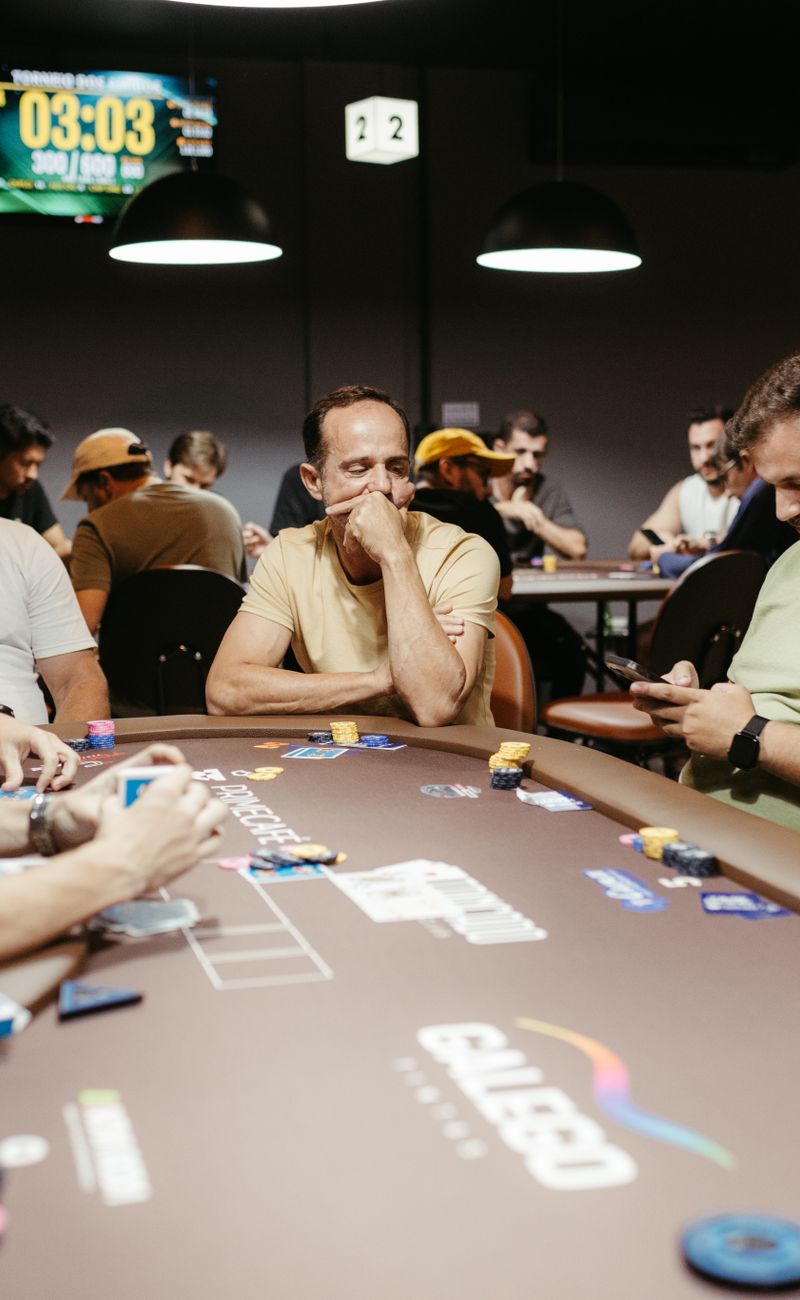
Start by observing the atmosphere. A table where players are laughing, ordering drinks, and chatting comfortably is almost always a better game than a table where everyone is quiet and focused. Relaxed players make emotional decisions. Focused players make calculated ones. You want the relaxed table every time. When players are having fun and bonding over conversation, they call too much, they bluff too little, and they stack off with second-best hands without hesitation.
Look at the stacks. In a typical live poker room, you want to see a wide distribution of stack sizes. The ideal table has a mix of short stacks, deep stacks, and everything in between. A table where everyone has roughly the same stack depth is often a sign that the players know what they are doing. They bought in for a specific amount and they are managing it carefully. That discipline is exactly what you do not want to face.
The presence of multiple large stacks is a green flag. These are usually recreational players who brought more money than they planned to play with, or winners from earlier sessions who are running well. Either way, they represent targets. Short-stacked tables can also be good, but for different reasons. Short-stacked recreational players are often there for a quick gamble and will commit with any reasonable hand rather than fold and wait.
The Player Types You Want at Your Table
Not all recreational players are created equal. Understanding the specific player types that populate soft games will help you identify which table to join and which to skip.
The talking caller is your ideal mark. This is the player who narrates their hand, comments on the board, and cannot resist calling bets just to see what you have. They play too many hands, they do not fold to continuation bets on the flop, and they will call you down with weak pairs because they want to see the showdown. The talking caller subsidizes the entire table. If you can get seated to the left of one of these players, your hourly rate improves immediately.
The drunk gambler is another preferred target. You can usually spot this player from across the room. They are ordering drinks regularly, laughing loudly, and playing every hand that crosses their screen. Their bet-sizing is erratic. They go all-in with Ace-high and they call three-bets with suited connectors because they like the way they look. Drunk gamblers are not there to play poker. They are there for entertainment. Your job is to be part of that entertainment while quietly taking their money.
The elderly recreational player is a classic fixture in live poker rooms. These players often have a lifetime of habits built into their game. They play a narrow range, they value position differently than modern players, and they have emotional relationships with certain hands or suits. They will call with suited connectors because they had a good hand with that suit once in 1987. Exploit these tendencies ruthlessly. Do not feel guilty. They chose to sit down and play.
The tourist who is in town for a convention or a wedding and decided to try the casino is excellent. They do not know the local player tendencies. They do not understand the flow of the game. They are playing with a small bankroll they can afford to lose and they want the experience more than the money. These players are found at every poker room on the strip and in every cardroom in the country.
The Player Types You Must Avoid
Just as important as knowing who to target is knowing who to flee from. The live poker landscape has a higher concentration of regulars than it did a decade ago. Many of these players are competent. Some are very good. Sitting down at a table full of experienced regulars is a recipe for a grinding session where the most you can hope for is to finish close to even after rake.
The tight aggressive reg is your primary threat. This player plays a narrow range, 3-bets frequently, and does not make passive calls with weak hands. They know how to extract value from weaker players and they know how to get away from trouble when they have it. You cannot outplay this player with clever tricks. You need them to pay you off when you hit a big hand, and they rarely will.
Watch out for tables where players are folding quickly. If you see a table where players are folding to raises with alarming frequency, that table is not as soft as it looks. Either the players are tight, or they have been played by a regular who is currently seated and has already done the table selection work you are attempting. Move along.
Tables where players are discussing hand histories in detail are another warning sign. Recreational players do not discuss hand histories. They celebrate big wins and shake their heads at bad beats. When players are analyzing ranges and discussing whether a call was correct, you are at a table of players who take the game seriously. That is not the table you want.
How to Assess a Table in the First Thirty Minutes
Once you sit down, your assessment continues. The first orbit of hands tells you more about the table than any amount of observation from the rail. Watch how players react to raises, how they handle variance, and how they interact with each other.
Pay attention to the limp. How many players are limping in? A table with four or five limpers is a dream. These players are telling you they will pay to see flops. Your raising range should be wide. Isolation limpers with position becomes your primary profit mechanism. A table with no limpers and constant raises is a table full of players who understand positional awareness. That table is not worth your time.
Note how players respond to continuation bets. Recreational players call continuation bets too often. If you see players calling flop bets with weak pairs, gutshots, and backdoor draws, you are in the right game. If players are raising continuation bets, check-folding, or otherwise playing with a balanced range, you are at a table of thinking players. Adjust accordingly or find a new table.
Stack sizes can change during the first orbit. A player who starts deep and buys in for more after losing a few hands is a recreational gambler who cannot control their reload impulse. A player who starts deep and moves seats to a smaller stack is a professional who is managing their risk exposure. You want the reloaders. You want the players who treat the poker room like a casino first and a cardroom second.
The Practical Side of Table Hopping
Most poker rooms in 2026 allow reasonable table hopping. You are not locked into your seat. If you sit down and the table is not what you expected, you can request a table change. This is a normal part of the live poker experience and no one will judge you for it. If anything, the regulars at the hard table will be relieved to see you go.
Do not feel obligated to play hands while you are assessing. You can fold your blinds, fold your button, and wait for a better spot. Folding for an orbit costs you nothing. Playing a marginal hand because you feel awkward about not playing costs you plenty. Confidence in your fold is part of table selection discipline.
When you find a soft table, stay there. The temptation to move to a bigger game will arise. Resist it. Soft tables do not stay soft forever. The drunk gambler will leave. The talking caller will go home. Enjoy the game while it is profitable and resist the urge to search for something better. Chasing better games is how you end up at a table of regulars who have been waiting for exactly that seat to open up.
Your buy-in amount matters. If you sit down with a short stack at a table of deep recreational players, you are limiting your upside. Buy in for the maximum or close to it. You want enough chips to extract value when you hit big hands. Short-stacking yourself at a soft table is leaving money on the table.
Table Selection Is Not Cheating. It Is the Game.
Some players feel guilty about table selection. They think it is somehow unfair or unsportsmanlike to avoid good players and seek out weak ones. Let me be direct about this. Table selection is not a loophole in the game. It is the game. The entire concept of poker rooms, casino floors, and poker tables exists because players are supposed to choose where to play. The poker room wants you to find the best game. They arrange tables specifically so you can make this choice.
You are not manipulating the game. You are not colluding. You are not using a banned tool or accessing hidden information. You are using publicly available information to make a rational economic decision. Every successful poker player does this. Every professional gambler does this. If you are not table selecting in live poker, you are leaving money on every table you sit at that is not the softest option available.
The players who resent table selection are the ones who lose to it. The regular who keeps getting avoided at the soft table is not happy about being identified as a strong player. That is their problem, not yours. Your job is to maximize your expected value, and table selection is one of the highest-EV actions you can take in live poker.
Walk the room. Watch the stacks. Listen to the conversation. Find the table where players are having the most fun and spending the most money. Sit down, buy in deep, and play your best poker. That is the protocol. That is how you build a live poker session that you can take to the bank.