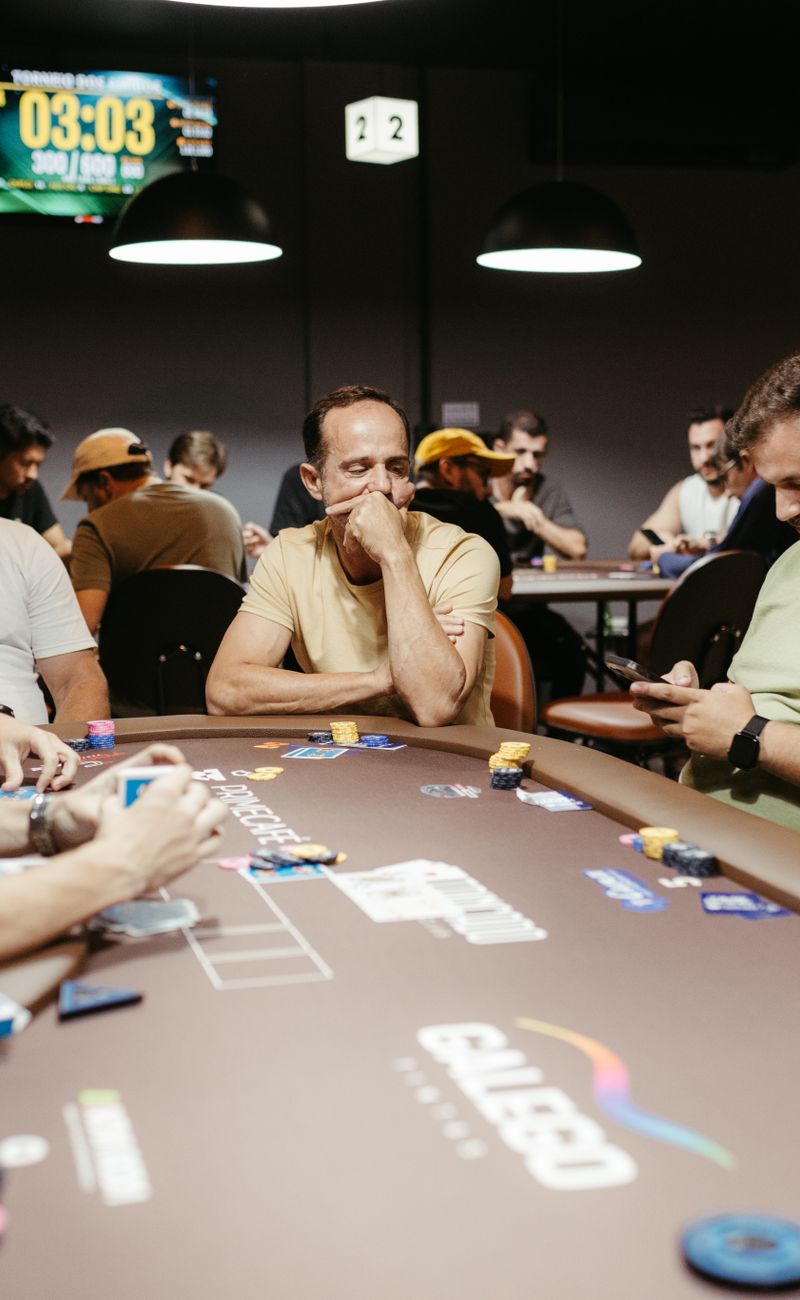
Live Poker Table Selection: Find the Softest Games (2026)
Master the art of live poker table selection to find the weakest competition and maximize your hourly win rate at every stakes level.

The Money Is Not in the Cards. It Is in the Table You Choose.
Table selection is the single highest expected value decision you make in live poker, and most players treat it like they are picking a parking spot. They walk in, scan the room for an open seat, and sit down at the first available game. Then they wonder why they are bleeding money in a room full of recreational players who somehow all have the best of them. The truth is simple. In live poker, your win rate is not primarily determined by your strategy or your hand reading. It is determined by the quality of your opponents. Table selection is not a supplementary skill. It is the foundation everything else is built on, and if you are not treating it that way, you are leaving money on every table you sit at.
Live poker table selection is the process of actively choosing which game to join based on the observable weaknesses of the players already seated. The games are not equal. They never have been. A 1-2 game at 10 AM on a Tuesday looks nothing like a 1-2 game at midnight on a Saturday. The players, the stacks, the atmosphere, the tempo. All of it differs, and those differences translate directly into dollars in your pocket or dollars leaving your pocket. The players who consistently win at live poker understand this instinctively. They do not just play poker. They hunt poker.
Here is the hard truth most players do not want to hear. If you are playing at the first table that opens up, you are not really playing poker. You are rolling dice against a random sample of players. Some will be fish. Some will be rocks. Some will be decent regulars. The house does not care where you sit. The floor does not care where you sit. Only you should care, and most players do not give it the attention it deserves until they are already down three buy-ins and wondering what went wrong.
What You Are Actually Looking For When You Scout Tables
Most players scout tables wrong. They look at stack sizes, or they look at whether someone is drinking, or they think a loud table must be full of action. These are shallow signals. Real table selection in live poker is about identifying structural weaknesses that will persist for hours, not momentary flashes of loose play that evaporate after one orbit.
The first thing you want to identify is player type concentration. You are looking for a table that has a high ratio of recreational players to regulars. Recreational players are the ones who play too many hands, call too much, do not fold when they should, and make decisions based on gut feeling rather than pot odds. They are your revenue source. Regulars are the ones who cost you money even when you have the best of it. They play solid fundamental poker, they do not give away money gratuitously, and they will adapt to your strategies over time. You want to sit with the fish and avoid the sharks, and that means you need to be able to tell the difference before you commit your chips.
Stack depth is the second critical factor. The ideal live poker table has a mix of short stacks and deep stacks. Short stacks, meaning players with forty big blinds or less, tend to play straightforward poker. They are either all-in or folding, which simplifies the game and creates clear decision points. Deep stacks, meaning players with two hundred big blinds or more, have more room to play post-flop and can extract value from their strong hands. The worst tables are filled with medium stack players, roughly one hundred big blinds, who know enough to get tricky but not enough to play well in tricky spots. These players will call you down with weak pairs, float you with nothing, and generally make the game chaotic in ways that are hard to exploit consistently. You want either simpler or deeper. Medium stacks are the enemy of good table selection.
Position matters at the table, but it also matters when choosing a table. You want a table where the recreational players are to your left and the tighter players are to your right. This means you get to act after the fish on most streets, which gives you maximum control over the pots and maximum ability to extract value when they make mistakes. Before you sit, you cannot control your exact seat, but you can choose a table where the seating arrangement naturally favors you. If you see a table with two or three obvious recreational players clustered on one side, that is the table you want, assuming the regulars are not stacked in a way that neutralizes your positional advantage.
The Five Red Flags That Signal You Should Keep Walking
There are specific signals that should make you immediately avoid a table, not just hesitate but actively keep walking and find a different game. These red flags are not opinions. They are patterns that experienced players recognize as predictors of tough games.
Red flag number one is a table full of players who are all wearing headphones or hoodies with the hood up. This signals focus and preparation. These are players who came to work. They are not drinking. They are not chatting. They are here to play solid poker, and they have eliminated distractions that might otherwise soften their game. You can occasionally find a recreational player hiding in headphones, but more often than not, a table full of covered heads means a table full of regulars who know what they are doing.
Red flag number two is a table where every player has a roughly equal stack. In a good game, you want stratification. You want some short stacks, some monsters, and some medium stacks. When everyone is within twenty big blinds of each other, it means the table has been playing conservatively and no one has gotten short or stacked. This typically happens in games where players are tight, cautious, and waiting for premium hands. That is not the game you want to join.
Red flag number three is visible note cards, strategy books, or electronic devices that are clearly not phones. If a player is consulting a chart or a solver output at the table, they are not recreational. They are serious. One or two serious players at a table is manageable. A table where multiple players are consulting reference materials is a table where the games have evolved past the point of easy money.
Red flag number four is a dealer who looks stressed or bored in a way that suggests the table has been slow. Slow tables mean big pots and patient players. That can be good, but more often it means the players are comfortable, nobody is shipping it in light, and the game has reached an equilibrium that favors the house. You want speed. Fast games mean active pots, which means more opportunities for mistakes, which means more money for you.
Red flag number five is when you walk up and every single player is watching the board and thinking. That sounds normal, but in a genuinely soft game, there are always at least two or three players who are not watching the board. They are on their phones, talking to neighbors, looking at the ceiling. If everyone at the table is in the tank on every decision, you have stumbled into a tough game or a table that has tightened up due to recent bad beats. Either way, keep walking.
How to Read the Room Before You Sit Down
Observation is a skill, and like all skills, it improves with practice. When you arrive at a live poker room, do not sit immediately. Stand behind a few tables and watch for ten to fifteen minutes before committing to a seat. You are not just watching cards. You are watching people.
Start with the sound. Recreational players talk. They comment on hands they are not in. They narrate the board. They celebrate folds and celebrate wins in ways that have nothing to do with the amount of money in the pot. The louder the table, the better, generally speaking. Quiet tables are often tables where players are focused and intentional, which means they are less likely to make the kind of large errors that fund your winnings.
Watch how people handle their chips. Recreational players often have messy stacks, odd stack sizes, and no apparent system for organization. They splash the pot when they bet. They call with the wrong denominations. They take forever to make change. Regulars have neat stacks, measured bets, and quick decisions. When you see a player fumble with their chips before betting, that is a player who is not calculating. They are guessing. Those are your best friends at the table.
Look at the cards on the felt. If you see a lot of boards that hit ranges rather than specific hands, that tells you something about how people are playing. A board of queen high with a straight possibility and a flush draw means someone probably floated or called with suited connectors. A board of king high all spades means someone probably bet with a flush draw and hit. Boards that tell stories about multi-street play are boards where people are playing hands they should not be playing, which is exactly what you want.
Pay attention to the floor. If the floor is sending players to a specific table, that table probably just lost a player or two. Tables that are losing players are tables that are worth watching. Sometimes a player leaves because they are tired, not because they are losing. But often, especially in cash games, a departure means someone decided the game was not worth their time. Follow that information. If players are leaving a table and not being replaced, there is a reason, and you should find out what it is before you sit.
The Math Nobody Talks About
Expected value in live poker is not just about hand strength. It is about the mathematical edge you have over your opponents, and table selection determines that edge before a single card is dealt. Consider this. If you have a five big blind per hour edge over a recreational player in a live game, you need roughly two hundred hours of play to realize one thousand big blinds of profit. That is a significant time investment. But if you sit at a table where you have a ten big blind per hour edge because the players are softer, you reach that same one thousand big blinds in half the time. The difference between a good table and a great table is not a few extra big blinds per orbit. Over a year of serious live play, it is the difference between a modest win rate and a transformational one.
Table selection also affects variance. Softer games tend to have higher variance in the short term because recreational players play more hands and get to weird spots more often. But they also have lower variance in the long term because your edge is larger and more consistent. Tougher games have lower short-term variance because everyone is playing tight and the pots are smaller, but they have higher long-term variance because your edge is smaller and rake takes a larger percentage of your winnings. When you choose a soft table, you are choosing to accept some bumpier sessions in exchange for a higher average outcome over time.
Rake is the silent killer in live poker table selection. Games with more players generate more rake, which means your net win rate is always lower than your gross win rate. A table of eight or nine players looks more attractive before you sit, but if five of them are recreational players who are not very good, the rake on those multi-way pots will eat into your profits significantly. A six-handed game with four recreational players is often a better choice than a nine-handed game with five recreational players because the rake is lower and your positional advantage is cleaner.
Practical Protocol for Your Next Session
Here is exactly what you should do every time you play live poker. Arrive at the room and take a lap before you ask for a seat. Walk the room slowly. Look at the tables. Count the players. Note the stack sizes. Listen to the noise. You are not just scouting. You are hunting.
Identify two or three tables that look promising based on what you see. Write down the table numbers if the room is large enough. Then wait. Do not take the first table that opens. The floor will offer you seats. Decline politely. Tell them you are waiting for a specific game. In most rooms, the floor will accommodate a preferred seat request if you are clear about what you want. If they cannot seat you at the table you want within a reasonable time, take the best available option from your list.
Once you sit, your job is not done. Table dynamics change. Players leave. New players sit. A soft table can become a tough table within an hour. You should be constantly re-evaluating. If you look around and realize the fish have left and been replaced by regulars, you should leave. Do not be loyal to a seat. Be loyal to your expected value. Stand up, color up, and find a better table. There is always another game. The player who wins the most is the player who is willing to move most freely in search of the best spots.
Live poker table selection is not a one-time decision. It is a continuous process of evaluation and re-evaluation that runs from the moment you walk into the room until the moment you leave. The players who take it seriously do not just play poker. They extract money from a system that is designed to take money from players who do not pay attention. That is the whole game. Find the softest table. Sit with your best face. And play the players, not the cards.