How to Read Live Poker Opponents: Complete Player Profiling Guide (2026)
A comprehensive guide to reading and profiling live poker opponents using physical tells, betting patterns, and behavioral observations to make better decisions at the table.

Why Your Live Poker Reads Are Worth More Than Any Solver Output
You cannot run a solver at the table. You cannot review your database between hands when the game is moving at two hours per orbit. What you can do is watch. And in live poker, watching is everything. The information available to you in a single live session dwarfs anything you will find in a training video or GTO chart. Physical tells, betting rhythm, the way a player checks her cards, the speed of a call, the direction of an eye flick. These are the data points that separate profitable live players from break-even ones. The problem is that most players do not know how to organize what they see. They notice things but never build a coherent profile. This guide fixes that. You will learn how to watch efficiently, how to categorize what you observe, and how to translate observations into profitable decisions. Everything here is designed for the live poker table. Some of it applies online but the emphasis is on in-person play because that is where most of you are leaving money on the table.
The Four Pillars of Live Player Profiling
Before you start cataloging individual tells, you need a framework. Player profiling in live poker rests on four observable categories. The first is physical tells. This includes bet sizing patterns, chip handling, posture, eye contact, and the speed of decisions. The second is verbal behavior. What does your opponent say, when do they say it, and how does their speech change under pressure. The third is betting architecture. How does this player open, how do they respond to raises, how do they construct continuation bets and check-raise ranges. The fourth is timing. How long does it take them to act in different spots. These four pillars work together. A single data point is nearly worthless. A pattern across all four categories is a goldmine. The player who hesitates before calling on the flop, looks away from the board, and then calls quickly when a brick hits the turn is telling you something specific. You need all three observations to build the read. Without the pattern, you are guessing.
Physical Tells That Actually Mean Something
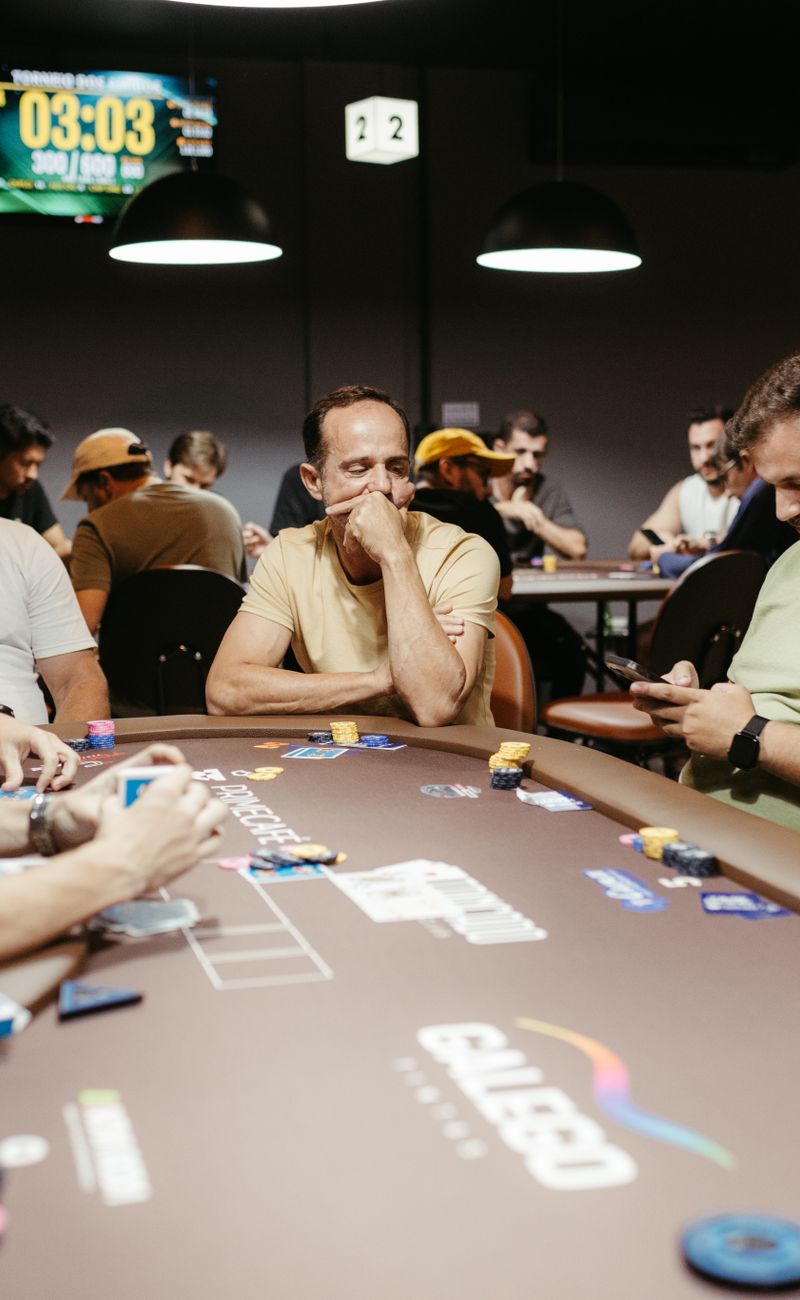
Not all tells are created equal. Some are myths perpetuated by poker movies. Staring at cards does not mean weakness. Covering your mouth does not mean you have a big hand. These are folklore. The tells that matter are behavioral inconsistencies. Watch for changes from a player's baseline. If someone is normally animated and suddenly goes silent, that is data. If a loose player who talks constantly becomes focused and still, pay attention. The shift itself is the tell, not the specific behavior. Here are the physical indicators that have proven reliability in live games.
Breathing changes are among the most honest tells because they are involuntary. A player whose breathing quickens or becomes shallow often has a strong hand. Their body is responding to the stress or excitement of holding premium cards. Watch their shoulders and chest. Similarly, flushing or paleness in the face can indicate adrenaline spikes. These are not guarantees. They are frequency indicators. You will see this behavior more often with strong hands. Track it over time and build your profile.
Chip handling tells are underrated because most players do not realize they are broadcasting. A player who mixes their chips loosely when betting with a range often does not have a specific strong hand. They are in autopilot. Compare that to the player who counts out their chips carefully, arranges them in neat stacks, and then pauses before pushing forward. That deliberate behavior often corresponds to a specific hand strength. The counting is not the tell. The change in behavior from their normal pattern is the tell. You need to establish baseline behavior first. Watch how someone handles chips during routine decisions before you try to read them in big pots.
Eye movement and eye contact deserve their own section because players are notoriously bad at controlling them. A player who stares at the board after the flop is usually trying to appear calm. The ones who cannot look at the board, who glance at the pot and then away, are often experiencing the discomfort of a draw that missed or a hand they are bluffing. Watch for the direction of glances. Looking toward a player's stack often means they are thinking about betting. Looking at their cards after the board is dealt is different from looking at the board itself. One is confirming what they hold. The other is calculating. Learn to distinguish between the two.
Verbal Behavior and Table Talk
Live poker is social. Players talk. Some talk constantly. Some never say a word. Both behaviors are useful. The quiet player who suddenly speaks up is sending a signal. The talkative player who goes silent is sending a stronger one. Verbal behavior is particularly valuable in live games because so many players do it without realizing they are providing information. The key is to listen actively rather than passively. When a player says something, ask yourself why they said it now and not three hands ago. Context matters. A comment made in a calm pot is different from the same comment made after a big call or fold.
Some verbal patterns are especially reliable. Players who narrate their decisions out loud, saying things like I guess I have to call or this is close, are often looking for permission. They are not actually asking for your opinion. They are convincing themselves. When you hear this pattern, their decision is usually made already. They are stalling because they are not confident. Fold more often when a player uses this verbal pattern after you bet. Players who ask questions about your hand are often weak. What do you have? or are you raising me? are usually attempts to gather information because they do not have a strong hand themselves. A player with a premium hand does not need to ask. They are either calling or raising.
Be careful with table talk that seems designed to provoke a reaction. Some players use conversation as a bluff. They will say something casual or make a joke when they have a weak hand to make you think they are relaxed. This is a reverse tell. The casualness is manufactured. The opposite is also true. Some players sulk when they have strong hands because they are disappointed the board did not change their situation. Your job is to establish the baseline. What does this player sound like when they have a normal hand. What do they sound like when they are strong. What do they sound like when they are bluffing. Only after you have answers to those three questions can you use verbal behavior as a reliable input.
Timing Tells and Decision Speed
Speed is one of the most honest inputs available in live poker. When a player decides to act quickly, it is usually because the decision is easy. When they hesitate, it is usually because they are thinking. The trick is knowing what they are thinking about. A quick call on the river usually means they are priced in or they have a made hand they are not excited about. A quick fold usually means they do not have anything or they were planning to fold before the action got expensive. A quick raise is almost always a strong hand. The exception is a quick raise that looks almost reflexive, like the player grabbed chips before they finished thinking. That can be a bluff, a panic move, or a tell that they are not comfortable with the hand. Timing tells require the same baseline approach as physical tells. You need to know what fast and slow look like for this specific player before you make conclusions.
Delays that come after a bet are particularly interesting. A player who tanks before calling usually has a hand that is not quite strong enough but is close. They are doing math. They are deciding whether the price is right. This happens with draws that are close to completing, middle pairs that are fighting for showdown, and bluff-catchers that are trying to decide if you are capable of bluffing. A player who tanks before raising is usually stronger. They are not deciding whether to play. They are deciding how much to extract. Watch for the timing of the raise itself. Does it come immediately after they look at their chips? Or do they sit with the decision for ten seconds and then suddenly raise? The delay pattern tells you about their comfort level with the hand.
Speed also reveals player types. Tight players often act quickly with their narrow range. Loose players often hesitate because they are genuinely trying to figure out what to do with a wide variety of hands. Knowing who is playing which style helps you contextualize timing. A quick call from a tight player means something different than a quick call from a loose player. The same logic applies to raises and folds. Timing tells are most powerful when combined with betting architecture. A quick raise from a tight player in a specific spot is a different read than a slow raise from a loose player in the same spot.
Building and Maintaining Your Player Profile
Observation means nothing without organization. You need a system for recording what you see and updating it as the session progresses. This does not mean taking notes at the table with a pen and paper. That is a disaster. It means building a mental framework that you can update in real time. Start with the four pillars. When you sit down at a new table, spend the first orbit doing nothing but establishing baselines. Watch how each player handles their chips, how they speak, how quickly they decide, and what their default demeanor is. Do not play many hands during this period. You are gathering intelligence. The best live players treat the first orbit of a new game as a scouting mission. They take notes mentally, they watch everyone, and they build provisional profiles before they start targeting anyone.
Profiles are dynamic. They should change as you gather more data. The initial profile you build in the first orbit is a hypothesis. You think this player is tight because they opened only two hands. But after thirty hands you realize they are actually loose but got unlucky with their early holdings. Your profile needs to update. This is where most recreational players fail. They lock into a read early and refuse to update it even when the evidence contradicts their initial impression. Be willing to your own read if the pattern demands it. The best live players are constantly revising. They treat every hand as new information that might adjust their model of an opponent.
Focus your profiling energy on the players who are in the most pots with you. You do not need a complete profile of the nit in seat seven who folds everything. You need a thorough profile of the loose player in seat three who is in half your hands. Time is limited. Spend it where the returns are highest. The regulars at your local card room will have well-developed profiles after a few sessions. New players require fresh data collection. Tourists and occasional players are the most rewarding to study because they are the most transparent. They have not developed the protective habits that regulars have. Their tells are often raw and unfiltered. Do not assume a tourist is a fish just because they are new. Some of the worst live players are regulars who have developed all the wrong habits and none of the right ones.
Translating Reads Into Decisions
A read that does not change your decision is a wasted read. The goal of profiling is to identify situations where your opponent's range is narrower or wider than their population tendency suggests. If you think a player is bluffing more often than their type usually bluffs, you call more. If you think their range is stronger than their line suggests, you fold more. This seems obvious but the execution is where players fail. They build a read and then do not adjust their decision size or line choice to exploit it. A thin value bet becomes a bluff catch when you know your opponent never bluffs. A check-raise becomes a flat call when you know this player only raises with the nuts. The decision should reflect the read directly.
Size your exploitation to the confidence of your read. A low confidence read should produce a small adjustment. A high confidence read earned over many hours of observation can justify dramatic deviations from your default strategy. Some of the most profitable plays in live poker come from identifying a single player's specific leak and targeting it repeatedly. Maybe this player never folds top pair. Maybe they cannot fold a flush draw even when the price is wrong. Maybe they overvalue Ace-high. Whatever the specific leak is, your read becomes a weapon when you can exploit it repeatedly. The key is to not over-adjust based on a single observation. Give yourself permission to be wrong occasionally. A read is a probability, not a certainty. Your goal is to shift your expected value in the right direction more often than you shift it in the wrong direction.
The hardest part of translating reads into decisions is overcoming your own ego. You will build a confident read on a player, make a decision based on that read, and be wrong. This will happen. It happens to everyone. The mistake is not adjusting your future reads after a loss. Your read might still be correct and they just got lucky. Or your read might be wrong and you need to update. You cannot know for certain after one hand. Trust the process over the long run. The players who build detailed profiles and adjust based on data win over time. The players who abandon their reads after one bad outcome are the ones who never develop this skill. Live poker rewards patience and observation. If you are willing to do the work, the returns are real.
The Bottom Line on Live Reads
Reading live poker opponents is a learnable skill. It is not mystical. It is not luck. It is observation, categorization, and disciplined exploitation. Build your framework around the four pillars. Establish baselines before making conclusions. Update your profiles constantly. Size your exploitation to your confidence level. And above all, watch more than you play in the early stages of any session. The information is there. Most players are broadcasting constantly if you know how to listen. The ones who figure this out will always have an edge over the ones who never bother to look.