Poker Grinder Workout Plan: Build Endurance for 8+ Hour Sessions (2026)
Discover the ultimate workout plan for poker grinders. Build physical stamina, sharpen mental focus, and sustain peak performance across marathon multi-tabling sessions with science-backed training.
Your Body is a Sitting Duck at the Poker Table
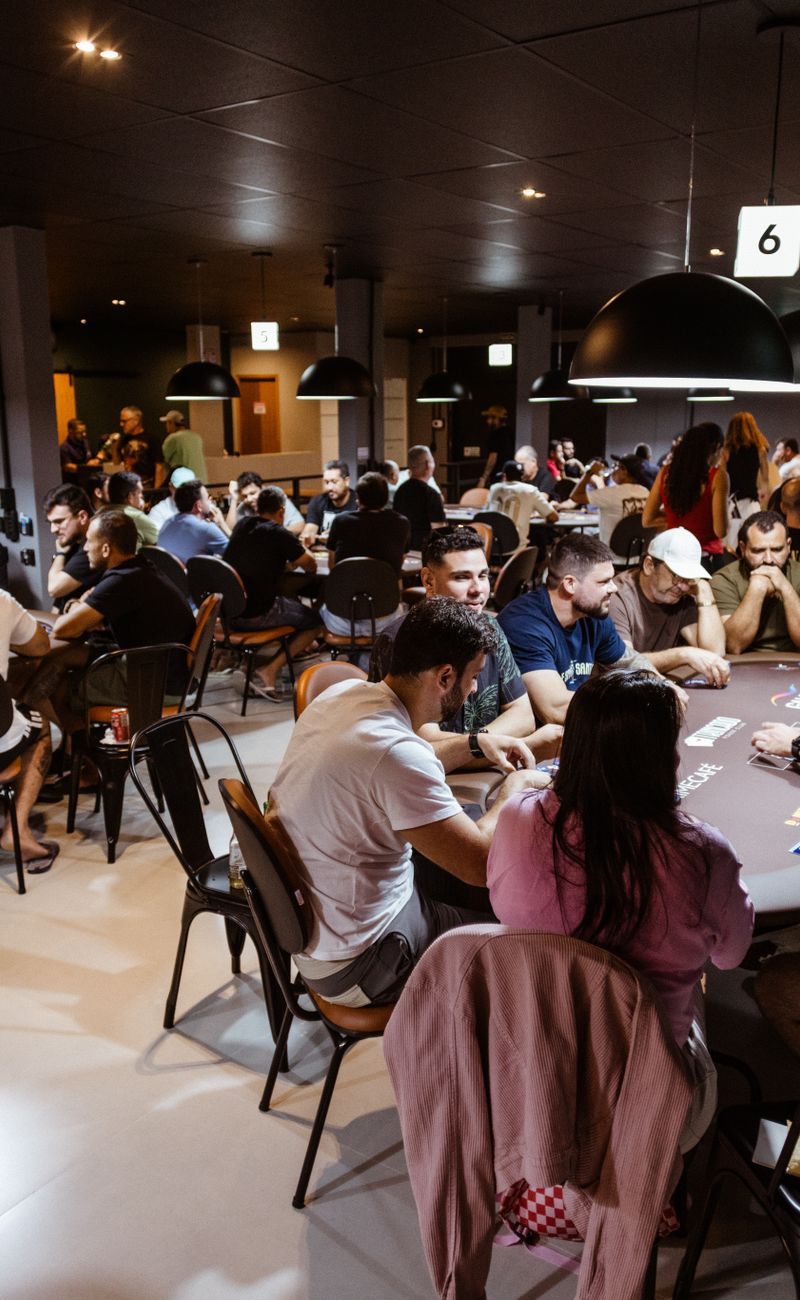
You spend 8 hours hunched over a screen. Your lower back screams by hour 6. Your shoulders feel like concrete by hour 8. You reach for a soda, order a pizza, and wonder why you feel mentally drained even when you played well. The problem is not your HUD or your solver subscription. The problem is you are treating your body like a rented car at the poker table. Poker grinders obsess over equity calculations and range construction while their physical conditioning deteriorates to the point where it directly costs them money. Fatigue kills decision quality. Bad posture destroys your mental game. A weak cardiovascular system limits your ability to recover between sessions and run it twice on the felt. This is your wake-up call. Your body is not optional equipment at the poker table. It is the machine running every decision you make.
Why Poker Players Specifically Need Endurance Training
The physiological demands of poker are misunderstood. You are not sprinting. You are not lifting weights. You are sitting. But sitting for 8 hours straight while maintaining cognitive load is one of the most demanding things you can ask of your body. The mental fatigue you experience after a long session is not purely psychological. It has a physical substrate. Your brain consumes roughly 20 percent of your metabolic output. When you are thinking hard for extended periods, your body is burning glucose and producing cortisol. Cortisol is not evil in moderation, but chronic elevation from stress and poor posture leads to the kind of mental fog that makes you call off with middle pair on a coordinated board because you cannot think clearly enough to fold. A poker workout plan built for endurance addresses the specific failure modes that grinders experience. Poor circulation from sitting kills oxygen delivery to your brain. Tight hip flexors from prolonged sitting create lower back pain that becomes a distraction. Weak glutes and a collapsed posture mean your body is working twice as hard to maintain basic function while you play. The result is that you fatigue faster, recover slower, and make worse decisions in the late stages of sessions when the money is typically won and lost.
The Foundation: Metabolic Conditioning for the Poker Player
You do not need to look like a bodybuilder. You need to build a body that can sustain mental output for hours without breaking down. This starts with metabolic conditioning, which is a fancy way of saying training your body to efficiently produce energy and clear waste products. The primary tool for this is low-intensity steady state cardio, performed 3 to 4 times per week for 30 to 45 minutes. Walking counts. Jogging counts. Rowing counts. The goal is to keep your heart rate between 60 and 75 percent of its maximum for the duration. This zone builds your aerobic base, improves your capillary density, and enhances your body's ability to buffer lactate. Yes, lactate. That thing you thought was the enemy from high school gym class. Lactate is actually a fuel source when your body is trained to clear it. An untrained poker grinder accumulates it fast and feels wiped after moderate exertion. A trained grinder recovers between hands, between sessions, and between days.
Your cardio protocol should start with what you can manage. If you are currently sedentary outside of your poker chair, start with 20 minutes of brisk walking every other day. Add 5 minutes per week until you are at 45 minutes comfortably. Then graduate to light jogging if your knees can handle it. The treadmill is not mandatory. Outdoor walking and hiking are excellent. The rowing machine at your gym is underrated and works your posterior chain while building cardio capacity. The elliptical is fine if you have joint issues. The specific modality matters less than the consistent application. The poker grinder who walks 45 minutes every morning will outperform the one who does nothing, even if the second person occasionally does intense spin classes and then sits for 10 hours afterward.
Strength Training for the Sitting Grinder
Cardio builds your engine. Strength training builds your structure. For the poker player, structure is critical because your body is in a compromised position for hours daily. Most grinders develop anterior dominance. Their chest is tight, their shoulders are rounded forward, their hip flexors are shortened, and their glutes are inactive. This is the classic desk posture pattern, and it creates a cascade of problems. The rounded shoulders restrict breathing. Shallow breathing means less oxygen to your brain. Tight hip flexors create a pelvic tilt that loads your lower back. A loaded lower back is a painful lower back. Inactive glutes mean your legs are not helping with circulation, so blood pools in your extremities and you feel sluggish.
Your strength work needs to address these imbalances with a focus on posterior chain development. The deadlift is your single most important exercise if you can perform it without injury. It loads your posterior chain, strengthens your grip, and teaches you to hinge at the hips, which counteracts the forward flexion of sitting. The Romanian deadlift variation is particularly useful because it emphasizes the hamstrings and glutes without the technical demands of the conventional deadlift. If you have a bad back and cannot deadlift yet, start with hip thrusts and glute bridges. Build up to the barbell variations over weeks, not days. Your body will adapt if you are consistent.
Rowing variations are critical for grinders. Bent-over rows, single-arm dumbbell rows, and face pulls strengthen your upper back and reverse the rounded shoulder posture that comes from looking at a screen all day. A strong upper back is not vanity. It is functional. It keeps your shoulders back, opens your chest for deeper breathing, and reduces the neck strain that leads to headaches during long sessions. You should be rowing twice per week minimum. The pull-up is also excellent. It builds grip strength, lat development, and overall upper body tension capacity. If you cannot do a pull-up yet, start with the assisted version or negatives until you can. The lat is one of the largest muscle groups in your body, and developing it burns significant calories while improving your posture.
The squat pattern is necessary for leg and glute development. You do not need to squat heavy to get benefit. Goblet squats and bodyweight squats build the glute capacity that sitting destroys. Strong glutes mean better circulation in your lower body, which means less swelling in your feet and legs during long sessions and faster recovery between days. If you play live poker, the ability to stand up straight and move comfortably between hands matters. Squatting builds that capacity.
The Program: Putting It Together for 8 Hour Session Endurance
A practical poker workout plan for a grinder needs to fit around your schedule, not demand a schedule that does not exist. You grind when the games are good. Your workouts need to be non-negotiable infrastructure, not optional recovery. Train in the morning before you play. Your sessions start at noon, you are in the gym by 8 AM, done by 9, showered and fed by 10:30. This gives you energy from the training without interfering with your playing time. If you are a night grinder, train before your session. The cortisol spike from training, followed by the glucose clearance from breakfast and the subsequent parasympathetic recovery, primes your brain for focus.
Your weekly structure should include 3 days of strength training, 3 days of cardio, and 1 complete rest day. For most grinders, this means Monday, Wednesday, and Friday for strength. Tuesday, Thursday, and Saturday for cardio. Sunday off. This split allows adequate recovery between strength sessions while maintaining consistent cardio volume. You can adjust based on your schedule, but the frequency should remain around 4 to 5 training days per week minimum. Fewer than this and you will not build the adaptations needed to sustain 8 hour sessions repeatedly.
Your strength days should follow a simple structure. Warm up thoroughly with 5 to 10 minutes of mobility work focusing on your thoracic spine, hips, and shoulders. Then perform your main compound lift. Deadlift or squat variations, 3 to 5 sets of 5 to 8 reps. Then your accessory work. Rows and pull-ups for your back, push variations for your chest and shoulders, accessory work for your biceps and triceps if you care about arm aesthetics, and core work because a stable trunk protects your lower back during all other movements. Finish with 5 to 10 minutes of stretching focusing on your hip flexors, chest, and hamstrings. This is not optional. Tight muscles after training become tighter muscles at the table.
Your cardio days are lower stress but not lower effort. You are building your metabolic base, so the duration matters more than the intensity. Aim for 30 to 45 minutes at a conversational pace. Your heart rate should be elevated but you should be able to speak in complete sentences. If you cannot, slow down. The goal is base building, not red-lining. Zone 2 training, as it is called, is where your body learns to burn fat efficiently and clear metabolic waste products. This is the currency of endurance.
Nutrition and Recovery: The Unsung Multipliers
Training without nutrition is like building a house with bad materials. Your body needs fuel and the right building blocks to adapt. For the poker grinder, your protein intake determines whether you build or maintain muscle. You need at least 1.6 grams of protein per kilogram of bodyweight daily, spread across 4 to 5 meals. This is not negotiable if you want strength adaptations. Protein sources should be whole foods first. Chicken, fish, beef, eggs, Greek yogurt, cottage cheese. Protein supplements are useful for convenience but should not be your primary source.
Carbohydrates are your friend for cognitive function. Your brain runs on glucose. Low carb diets work for some people, but they do not work well for people who need sustained mental output. Your pre-session meals should include complex carbohydrates for steady glucose release. Oatmeal, rice, sweet potatoes. Do not play on an empty stomach. Do not play on a sugar crash either. Find the balance that works for your body and replicate it.
Hydration is ignored by most grinders and it is costing them money. Dehydration even at mild levels impairs cognitive function significantly. You should be drinking water consistently throughout your session. Aim for at least 2 liters of water over an 8 hour period, more if you are sweating or drinking caffeine. Caffeine is fine in moderation but it is a diuretic. Each cup of coffee needs an additional glass of water to offset the dehydration effect. Chronic mild dehydration leads to headaches, brain fog, and poor decision quality that you will attribute to bad cards or bad luck.
Sleep is the foundation of recovery. You cannot out-train poor sleep. You cannot out-recover poor sleep. If you are playing 8 hour sessions and then sleeping 6 hours, you are accumulating debt. The research on sleep deprivation and cognitive impairment is not ambiguous. Reaction time degrades. Emotional regulation suffers. Decision quality drops. Your target is 7 to 9 hours of sleep per night, consistent with your schedule. If you are a night grinder, your sleep window might be noon to 7 PM. That is fine. The specific timing matters less than the duration and quality. Prioritize your sleep like it is part of your edge at the table, because it is.
The Bottom Line on Poker Endurance Training
You will not outthink a fatigued body. Your solver training means nothing if you are running on cortisol and caffeine at hour 7 with a fogged brain and a sore back. The grinders who sustain profitability over years are the ones who treat their bodies as professional tools, not afterthoughts. Your opponents are not just studying poker theory. Some of them are training their bodies to maintain edge longer than you can. They have better circulation, better posture, better recovery. They think clearly longer. They make fewer mistakes in the late stages because their physical infrastructure supports their mental output. You can compete with them if you build your own infrastructure. Start small. Walk 30 minutes today. Deadlift twice this week. Stretch your hips before your next session. Your bankroll will reflect the investment.